
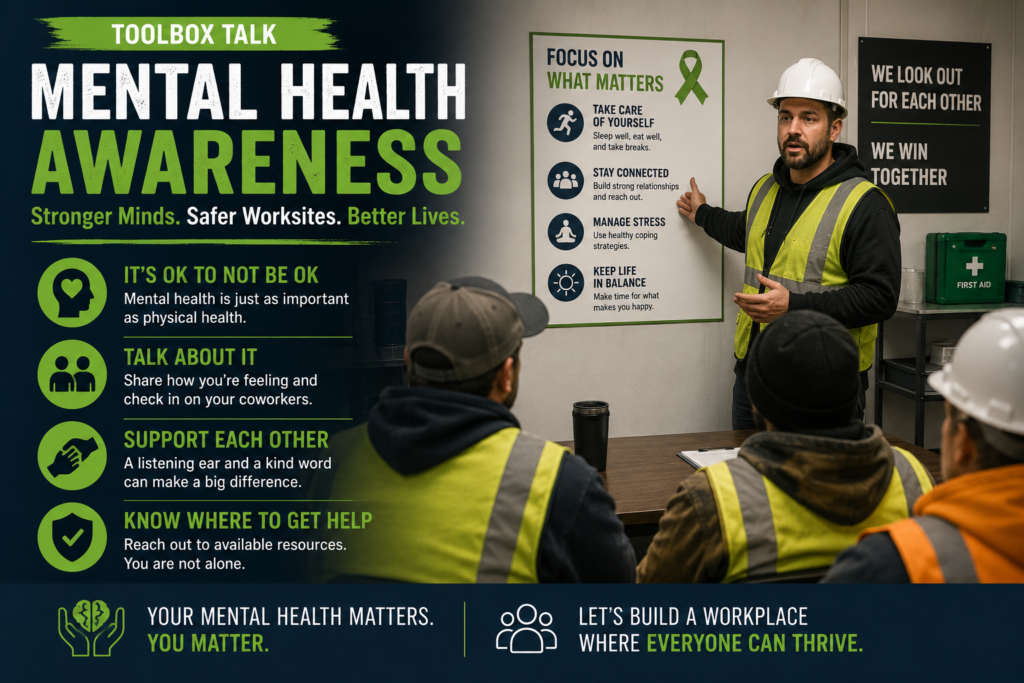
Why Are We Talking About This?
When we think of workplace safety, we usually think of hard hats, safety glasses, harness checks, and keeping our hands clear of moving parts. But there is another crucial safety tool we carry with us every day: our minds.
Just like physical injuries, mental health struggles can affect our focus, our reaction times, and our decision-making. When we aren’t mentally “on the job,” we are at a much higher risk of making mistakes that can hurt ourselves or our teammates.
The Reality: 1 in 5 people will experience a mental health challenge in any given year. It is just as real, and just as common, as a physical injury.
When people thrive at work, they are more likely to feel physically and mentally healthy overall, and contribute positively to their workplaces, families, and communities. This creates both a responsibility and unique opportunity for employers, managers, and supervisors to create workplace environments that support the health and well-being of workers.
The Warning Signs: Spotting the “Near Misses”
We know how to spot a frayed extension cord or a loose scaffold. We need to be just as good at spotting when a coworker (or we ourselves) might be struggling. Look out for these changes:
- Changes in Behavior: Becoming unusually quiet, irritable, quickly frustrated, or isolated.
- Safety Slippage: Forgetting standard safety steps, rushing, or showing a sudden lack of focus.
- Attendance Issues: Frequently arriving late, missing shifts, or looking visibly exhausted.
- Physical Signs: Trembling, extreme fatigue, or dramatic changes in weight or grooming.
Resilience is our superpower to bounce back when things get tough. Here are some suggestions on how to be super resilient at work:
- Keep stress in check and stay safe.
- Be there for your work buddies.
- Balance work and life.
- Eat well
- Exercise daily
- Relax and pursue a hobby
- Know when it’s time to ask for help.
3 Steps to Support Each Other
You don’t need to be a licensed therapist to make a difference on this crew. You just need to be a good teammate. Follow these three steps:
- Ask & Listen (Without Judgment)
If you notice a teammate acting differently, check in. A simple, “Hey, you haven’t seemed like yourself lately. Everything okay?” can open the door. If they talk, just listen. You don’t have to “fix” their problems—just letting them vent is a massive help.
- Guard the “Stigma”
In many industries, there is a false belief that talking about mental health makes you “weak.” It doesn’t. It takes courage to admit when you are struggling. We need to build a culture where guys and girls on this crew feel safe saying, “I’m having a rough time,” without fear of being teased or judged.
- Use Available Resources
If you or someone you know is feeling overwhelmed, you don’t have to carry it alone. We have resources in place to help:
- Our Employee Assistance Program (EAP): [Insert Company EAP Number/Details if applicable]
- National Resources: You can call or text 988 anytime for free, confidential support from the Suicide & Crisis Lifeline.
Discussion Points:
- Are you okay?
- Are your co-workers okay?
- What can you do to improve your mental health at work, at home?
“Check your mental PPE.” Before you start your shift today, take a quick 10-second mental inventory. If your mind is somewhere else, take a breath, refocus, and remember that your crew has your back. Let’s look out for each other out there.