
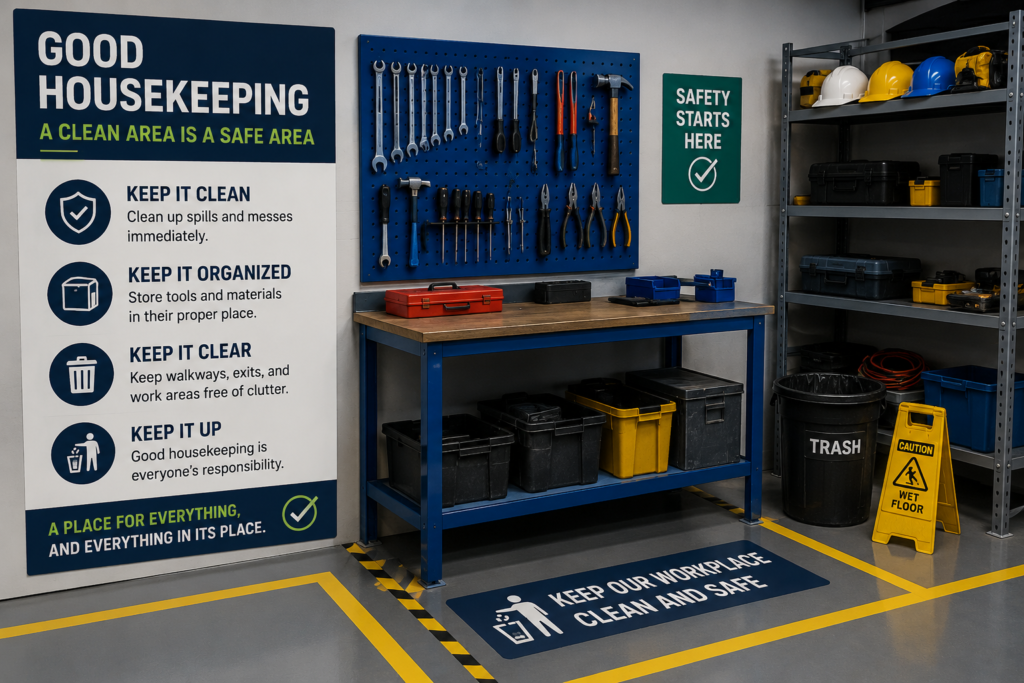
The Hard Facts: Why We Are Talking About This?
When the site gets busy, cleanup is often the first thing people skip. However, statistics show that housekeeping isn’t just about “looking good”—it is a matter of life and limb:
- The 15% Statistic: According to the Department of Labor, slips, trips, and falls account for 15% of all accidental workplace deaths, and the vast majority of these are directly linked to poor housekeeping.
- Hidden Hazards: A messy site hides worse dangers. Clutter, empty packaging, and dust can easily mask electrical hazards, floor openings, damaged scaffolding, or unstable surfaces.
- The “Mess Invites Mess” Effect: If one crew leaves their trash behind, it signals to others that housekeeping doesn’t matter. Soon, the entire job site becomes a hazardous obstacle course.
5 Critical Areas of Focus
1. Slips, Trips, and Falls (The #1 Hazard)
- Walking and Working Surfaces: Keep all walkways, stairwells, ramps, and emergency exits completely clear of debris, scrap materials, and tools.
- Cables and Hoses: Never run extension cords or hoses across active walkways. If unavoidable, they must be hung overhead, covered with heavy-duty cord ramps, or the path must be temporarily closed off.
- Spills: Mop up liquid, grease, or oil spills immediately. If you can’t clean it up right away, mark the area with warning tape or a sign to alert others.
2. Materials & Tool Storage
- Stacking and Staging: Pile, stack, and rack materials properly. Ensure stacks are stable so they cannot topple, slide, or collapse on someone.
- Edge Protection: Store all materials at least 6 feet away from roof edges, floor openings, wall openings, and trenches.
- Tie It Down: Secure any lightweight materials (such as foam, packaging, or light plastic) stored on roofs or upper floors so they cannot be picked up and thrown by high winds.
3. Fire and Explosion Prevention
- Combustible Waste: Empty cardboard boxes, wood shavings, dry drywall scraps, and sawdust are highly flammable. Empty waste containers regularly.
- Flammable Liquids: Store gasoline, oils, solvents, and cleaning agents in approved, upright containers inside designated safety cabinets. Keep them far away from “hot work” zones (welding, flame cutting).
- Oily Rags: Throw oil- or paint-saturated rags into self-closing metal safety bins to prevent spontaneous combustion.
4. Vehicle & Equipment Cabs
- No Loose Debris: Ensure equipment cabs (excavators, trucks, scissor lifts) are kept clean. Loose water bottles, tools, or trash rolling around the floor can get wedged behind brake and accelerator pedals, causing a total loss of machine control.
- Clear Dashboards: Do not store binders, hard hats, or tools on the dashboard where they can block your view or slide off during operation.
5. Protruding Nails & Sharp Objects
- The 1-Step Danger: Puncture wounds from stepping on nails are incredibly common. Before stacking or discarding used lumber, always pull the nails out or hammer them completely flat.
| DO | DON’T |
| Clean as you go: Take a few minutes throughout the day and at the end of your shift to tidy your immediate work area. | Don’t let trash pile up: Never wait until the end of the week to do a massive cleanup. |
| Remove or flatten nails: Before discarding scrap lumber, bend protruding nails flat or pull them out. | Don’t block access: Never obstruct walkways, stairs, ladders, emergency exits, or electrical panels. |
| Coil and protect cords: Keep extension cords, hoses, and cables neatly routed, taped down, or hung up. | Don’t throw materials: Never toss debris or tools from upper levels—always use designated chutes or bins. |
| Store materials safely: Keep stacks stable, secure loose items against high winds, and store flammables in approved cabinets. | Don’t ignore spills: Clean up liquids, oil, or grease immediately. If it’s a hazardous spill, report it. |
Discussion Points:
- What is the most cluttered area on our site right now, and how can we address it today?
- Are our current trash bins located in convenient spots, or do we need to move them closer to where the waste is actually being generated?
- Does anyone see any cords or hoses currently crossing a high-traffic pathway?
Before we start work today, everyone is tasked with taking 5 minutes to look at their immediate work area. Pick up any loose packaging, organize your tools, and make sure your exit paths are completely clear. Let’s look out for one another and keep this site safe! A clean site is a safe site.