
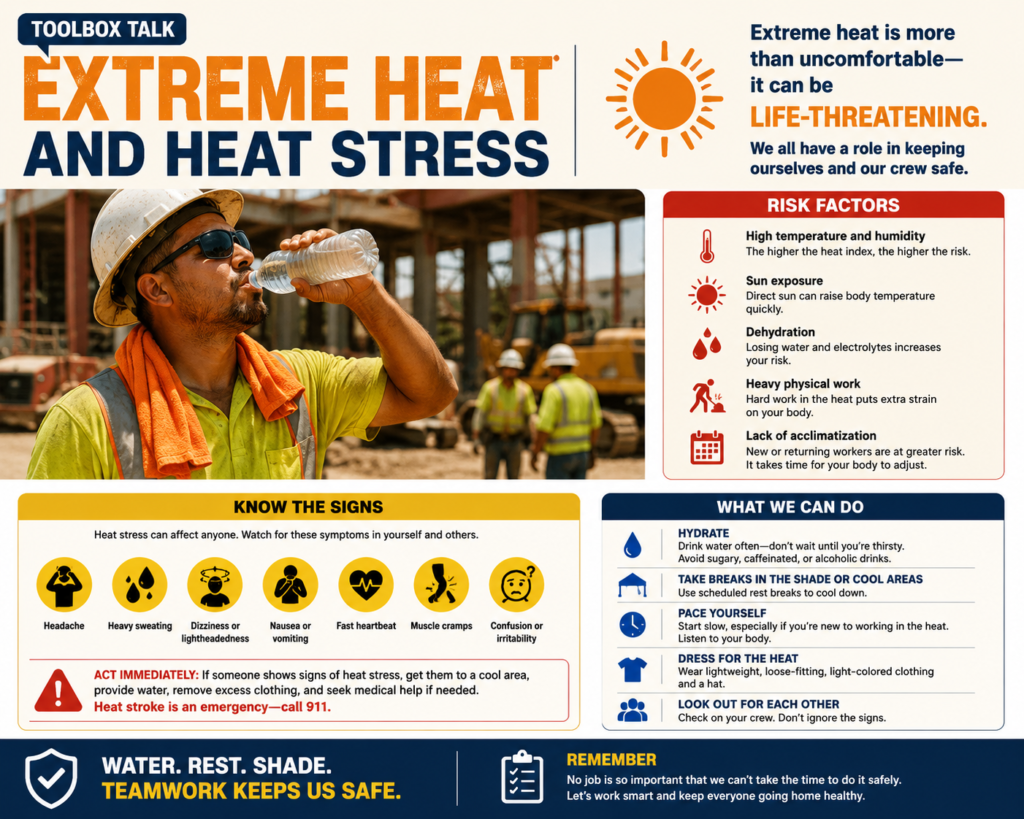
Extreme Heat and Heat Stress
Working in high temperatures can quickly become dangerous on construction sites. Heat stress can affect anyone, even experienced workers who are used to working outdoors. When the body cannot cool itself properly, serious illness or death can occur if warning signs are ignored.
Heat stress happens when the body absorbs more heat than it can release. Construction workers are at higher risk because of:
- Heavy physical labor, Direct sunlight exposure, High humidity, Limited airflow, Dark or heavy PPE, Dehydration, and long work hours.
Heat exhaustion is a serious condition that can lead to heat stroke if untreated.
Signs and Symptoms
- Heavy sweating, Weakness or fatigue, Headache, Dizziness, Nausea or vomiting, Cool, pale, clammy skin, Fast heartbeat, and Fainting.
Immediate Actions
- Move the worker to shade or air conditioning, Give cool water slowly, loosen clothing, apply cool wet cloths and monitor the worker closely
Seek medical attention if symptoms worsen or do not improve quickly.
Heat Stroke — Medical Emergency
Heat stroke is life-threatening and requires immediate emergency response. It can cause permanent organ damage or death.
Signs and Symptoms
- High body temperature, Confusion or disorientation, Slurred speech, Loss of consciousness, Seizures, Hot, dry skin or excessive sweating, Rapid pulse.
Emergency Response
- Call emergency services immediately, move worker to a cool area, Remove excess clothing, Cool the body rapidly using water, ice packs, or fans.
- Do NOT leave the worker alone
Things to do to Prevent Heat Related Illnesses
- Drink water every 15–20 minutes during extreme heat even if not thirsty
- Avoid excessive caffeine and energy drinks
- Replace electrolytes during long shifts or heavy sweating
- Take Scheduled Breaks – regular rest periods help the body recover.
- Use shaded or cooled rest areas
- Increase break frequency during extreme temperatures
- Rotate heavy tasks when possible
- Wear Proper Clothing
- Lightweight and breathable clothing
- Light-colored garments when possible
- Hard hats with sunshades if available
- Cooling towels or cooling PPE when appropriate
- Acclimatization – workers new to hot environments are at greater risk. New or returning workers should gradually increase workload and exposure over several days to allow the body to adjust safely.
Watch Out for Each Other
Heat illness can impair judgment, meaning workers may not recognize their own symptoms. Use a buddy system. Workers should monitor coworkers for Confusion, Fatigue, Dizziness, Slowed reactions, and unusual behavior. If someone looks unwell, speak up.
Supervisors should:
- Monitor weather and heat conditions
- Adjust work schedules when necessary
- Ensure adequate drinking water is available
- Provide shaded rest areas
- Train workers on heat stress recognition
- Encourage workers to report symptoms ASAP
- Key Safety Reminders
- Heat stress can happen quickly and unexpectedly
- Prevention starts before symptoms appear
- Hydration and rest are critical
- Never ignore signs of heat illness
- Heat stroke is a medical emergency
No job is more important than worker health and safety. Recognizing heat stress early and taking preventative action can save lives. Stay hydrated, take breaks, and look out for your coworkers during extreme heat conditions