
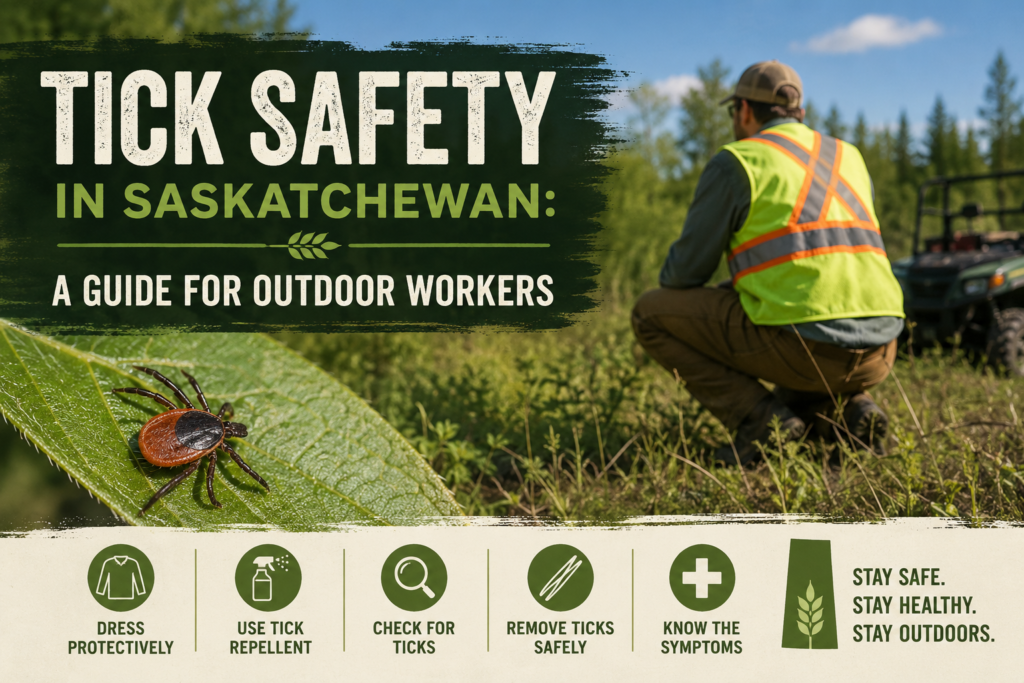
Tick Safety in Saskatchewan: A Guide for Outdoor Workers
As the snow melts and Saskatchewan’s outdoor work season kicks into high gear, a small but significant hazard emerges from the tall grass and brush. Ticks are an established reality in our province. While often just a nuisance, they can be vectors for serious diseases. At C Marcotte Safety Inc., we believe that proactive awareness and smart field practices are essential for keeping outdoor workers safe.
This guide covers tick identification, risk areas, safe removal, and disease symptoms.
1. Know Your Local Ticks
In Saskatchewan, the two primary species you must be able to identify are the American dog tick and the Rocky Mountain wood tick.
These ticks are often found in tall grass, ditches, wooded areas, and brush—exactly the types of environments where many agricultural, construction, and utility teams operate. They are most active during the spring and early summer (May and June).
Identify the Hazard:
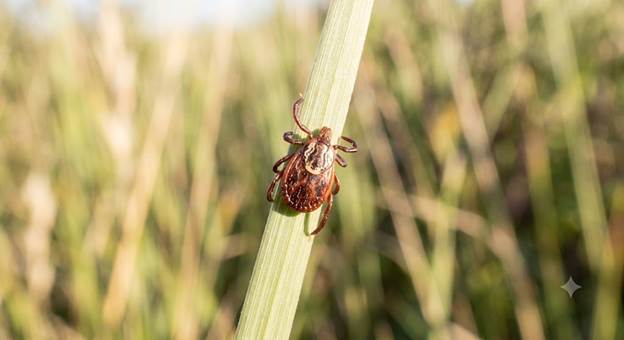
Image 1: A macro view of an adult American dog tick (Dermacentor variabilis). Note its hard, reddish-brown body and patterned scutum (the shield on its back).
A Note on Lyme Disease: Many workers are rightly concerned about Lyme disease. The primary carrier, the blacklegged tick (deer tick), is rare in Saskatchewan but is occasionally found, usually introduced by migrating birds. While the ticks in Image 1 do not carry Lyme disease, they can carry other rare illnesses like Rocky Mountain Spotted Fever. Any attached tick must be removed promptly and correctly.
2. Prevention: Your Best Line of Defense
Before heading into high-risk areas, ensure your crew is protected:
- PPE: Wear long-sleeved shirts, long pants, and closed-toe boots. Tucking pants into socks is an effective way to block access to skin.
- Repellent: Use an approved insect repellent containing DEET or Icaridin on skin and clothing.
- Tick Checks: Perform visual checks throughout the shift and complete a thorough “buddy check” at the end of the day, paying close attention to the scalp, behind ears, armpits, and the groin.
3. If You Are Bitten: Proper, Safe Removal
If a tick is found attached to the skin, it must be removed immediately. Do not suffocate it (with grease or oil) or burn it, as this can cause the tick to regurgitate pathogens into the bite site.
Follow these steps for safe removal:
- Use fine-tipped tweezers to grasp the tick as close to the skin’s surface as possible.
- Pull upward slowly and steadily with even pressure. Avoid twisting or jerking the tick, as this can cause parts of the mouth to break off and remain in the skin.
- Clean the bite area and your hands thoroughly with soap and water, rubbing alcohol, or an antiseptic.
- Dispose of the tick properly by placing it in a sealed container, wrapping it tightly in tape, or flushing it down the toilet. If illness develops, keeping the tick may help with identification.
- Monitor the bite area and your health for several weeks. Watch for signs such as a rash, fever, fatigue, muscle aches, or joint pain.
- Seek medical attention if symptoms develop or if you have concerns about possible exposure to tick-borne diseases.
Do Not:
- Crush the tick with your fingers.
- Use petroleum jelly, nail polish, gasoline, or other substances to try to make the tick detach.
- Burn the tick with a match or other heat source.
Remember: The sooner a tick is removed, the lower the risk of disease transmission. Conduct a full-body tick check after working in grassy, wooded, or brush-covered areas
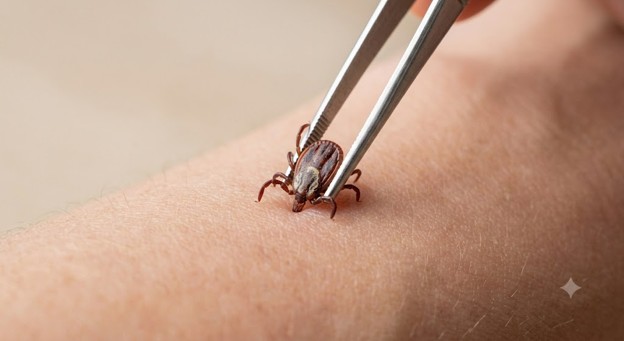
Image 2: Correct removal technique. Use fine-tipped tweezers to grasp the tick as close to the skin as possible. Pull straight upward with steady, even pressure.
After removal, clean the bite area with soap and water or an alcohol swab. Save the tick in a secure container if possible. Researchers at the University of Saskatchewan operate a public monitoring program (eTick.ca) where you can submit photos of the tick for identification, which helps monitor species distribution and risk.
4. Monitoring Symptoms and Disease Risks
While most tick bites do not result in disease, it is critical to monitor for symptoms for 3 to 30 days following a bite.
Early symptoms of tick-borne diseases often overlap and can resemble a severe flu, including:
- Fever
- Chills
- Headache
- Fatigue
- Muscle and joint aches
The Most Critical Warning Sign:
If you are monitoring a bite and see an expanding red rash, seek medical attention immediately. While uncommon in Saskatchewan, a distinct “bull’s-eye” rash is a strong indicator of early Lyme disease.
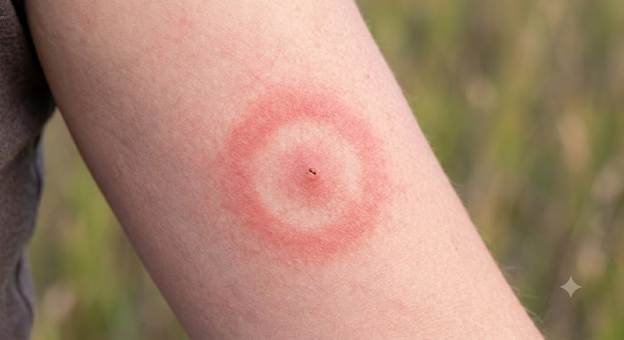
Image 3: A simulated “bull’s-eye” rash (Erythema migrans). This expanding, circular rash with a central clearing is a hallmark symptom that requires immediate medical evaluation.
Summary
Tick awareness is a fundamental aspect of outdoor occupational health. Ensure your workers are trained in prevention, equipped with the correct PPE and repellent, and know the precise, safe removal technique shown in Image 2. Prompt action and vigilant symptom monitoring are key to minimizing health risks.
Keep your team safe on the job. Contact C Marcotte Safety Inc. for comprehensive safety training and field protocols.