
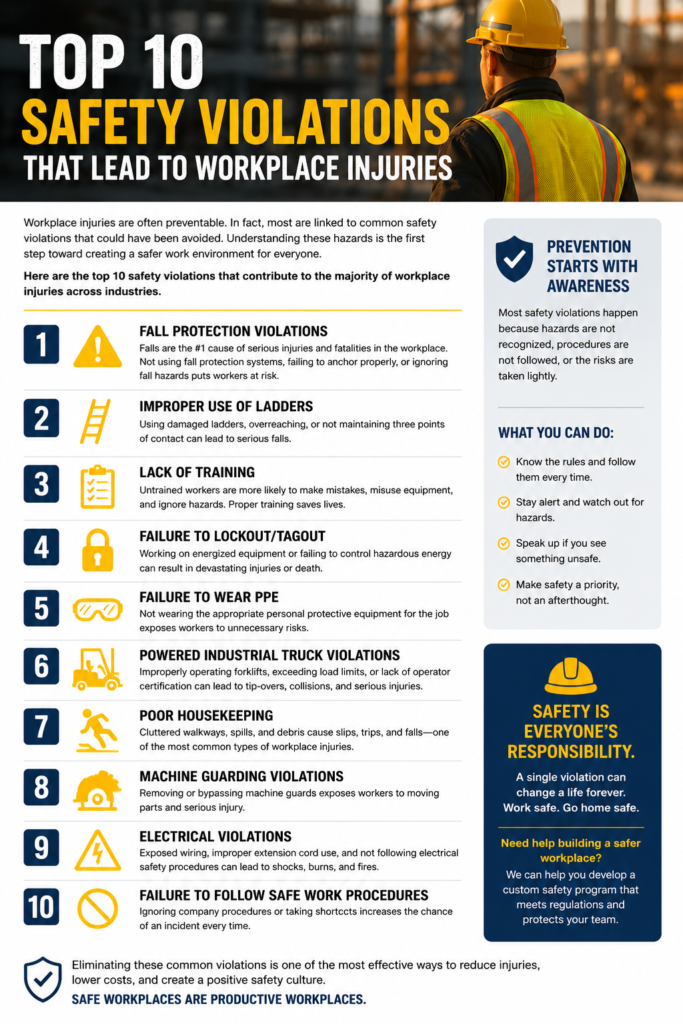
Top 10 Safety Violations That Lead to Workplace Injuries
Every year, thousands of workplace injuries occur because of preventable safety violations. While some incidents result from unexpected circumstances, the majority happen because established safety procedures are ignored or overlooked.
Whether you operate a construction company, manufacturing facility, warehouse, or industrial worksite, understanding these common safety violations can help protect your workers, reduce downtime, and lower the costs associated with workplace accidents.
Let’s look at the ten most common safety violations that contribute to workplace injuries—and what you can do to prevent them.
1. Fall Protection Violations
Falls remain one of the leading causes of serious injuries and fatalities in the workplace, particularly in construction.
Common violations include:
- Not wearing fall protection equipment
- Missing or damaged guardrails
- Improper use of safety harnesses
- Failure to secure anchor points
How to prevent it:
- Inspect fall protection equipment before every use.
- Train employees on proper harness use.
- Install guardrails whenever possible.
- Enforce 100% fall protection policies.
2. Improper Ladder Use
Ladders seem simple, but improper use causes thousands of injuries every year.
Common mistakes include:
- Standing on the top rung
- Using damaged ladders
- Overreaching
- Failing to maintain three points of contact
How to prevent it:
- Inspect ladders before use.
- Use the correct ladder for the job.
- Replace damaged ladders immediately.
- Train workers on ladder safety.
3. Lack of Safety Training
Even experienced employees need regular safety training.
Without proper instruction, workers may:
- Misuse equipment
- Ignore hazards
- Skip required procedures
- Put themselves and others at risk
How to prevent it:
- Conduct orientation for every new employee.
- Hold regular toolbox talks.
- Provide annual refresher training.
- Document all training sessions.
4. Failure to Follow Lockout/Tagout Procedures
Unexpected equipment startup can result in severe injuries, amputations, or fatalities.
Common violations include:
- Skipping lockout procedures
- Removing another worker’s lock
- Working on energized equipment
- Inadequate isolation of energy sources
How to prevent it:
- Develop written Lockout/Tagout procedures.
- Train authorized employees.
- Perform regular audits.
- Never bypass safety devices.
5. Failure to Wear Personal Protective Equipment (PPE)
Personal Protective Equipment is often the last line of defense against workplace hazards.
Common PPE violations include:
- Not wearing safety glasses
- Missing hard hats
- Improper footwear
- Failure to wear hearing protection
- Incorrect respiratory protection
How to prevent it:
- Supply appropriate PPE.
- Replace damaged equipment.
- Train workers on proper use.
- Enforce PPE requirements consistently.
6. Powered Industrial Truck Violations
Forklifts and powered industrial trucks are essential tools—but they can be dangerous when operated improperly.
Common violations include:
- Speeding
- Carrying unstable loads
- Untrained operators
- Poor visibility
- Lack of inspections
How to prevent it:
- Certify forklift operators.
- Perform daily inspections.
- Maintain safe travel speeds.
- Follow load capacity limits.
7. Poor Housekeeping
A cluttered workplace creates unnecessary hazards.
Common issues include:
- Debris left in walkways
- Extension cords across floors
- Oil or water spills
- Improper material storage
Poor housekeeping contributes to slips, trips, falls, and fire hazards.
How to prevent it:
- Clean as you work.
- Remove waste regularly.
- Keep exits clear.
- Store materials properly.
8. Machine Guarding Violations
Machine guards protect workers from moving parts that can cause devastating injuries.
Violations often include:
- Removing machine guards
- Operating equipment without protection
- Using damaged guards
- Bypassing safety interlocks
How to prevent it:
- Never remove machine guards.
- Inspect guards regularly.
- Shut equipment down before maintenance.
- Replace damaged guards immediately.
9. Electrical Safety Violations
Electricity poses serious risks when proper procedures aren’t followed.
Common violations include:
- Damaged extension cords
- Exposed wiring
- Overloaded circuits
- Improper grounding
- Working on energized equipment
How to prevent it:
- Inspect electrical equipment frequently.
- Replace damaged cords.
- Use Ground Fault Circuit Interrupters (GFCIs) where required.
- Only qualified personnel should perform electrical work.
10. Failure to Follow Safe Work Procedures
Many workplace injuries occur because employees take shortcuts or fail to follow established procedures.
Examples include:
- Skipping pre-job hazard assessments
- Ignoring permits
- Working without supervision
- Using equipment improperly
Even experienced workers can become complacent over time.
How to prevent it:
- Review procedures regularly.
- Encourage workers to ask questions.
- Hold supervisors accountable.
- Foster a workplace culture where safety comes first.
Building a Strong Safety Culture
Preventing workplace injuries isn’t just about following regulations—it’s about creating a culture where every employee takes responsibility for safety.
Companies with strong safety programs often experience:
- Fewer injuries
- Lower workers’ compensation costs
- Increased productivity
- Better employee morale
- Reduced equipment damage
- Improved reputation with clients and contractors
Safety should never be treated as an afterthought. When leadership demonstrates a commitment to safety and employees are properly trained, everyone benefits.
Need Help Improving Your Workplace Safety Program?
Developing and maintaining a compliant safety program can be challenging, especially as regulations and industry standards evolve.
Our team specializes in helping businesses build practical, effective safety programs that protect workers while meeting regulatory requirements. Whether you need assistance creating safety policies, conducting hazard assessments, preparing for audits, or delivering employee training, we’re here to help.
Contact us today to learn how we can help you build a safer workplace, reduce workplace injuries, and keep your business compliant.