
In the construction safety industry, the need for effective safety training is paramount. The introduction of Virtual Reality (VR) and Augmented Reality (AR) has revolutionized how we train workers. These technologies offer immersive and engaging experiences.
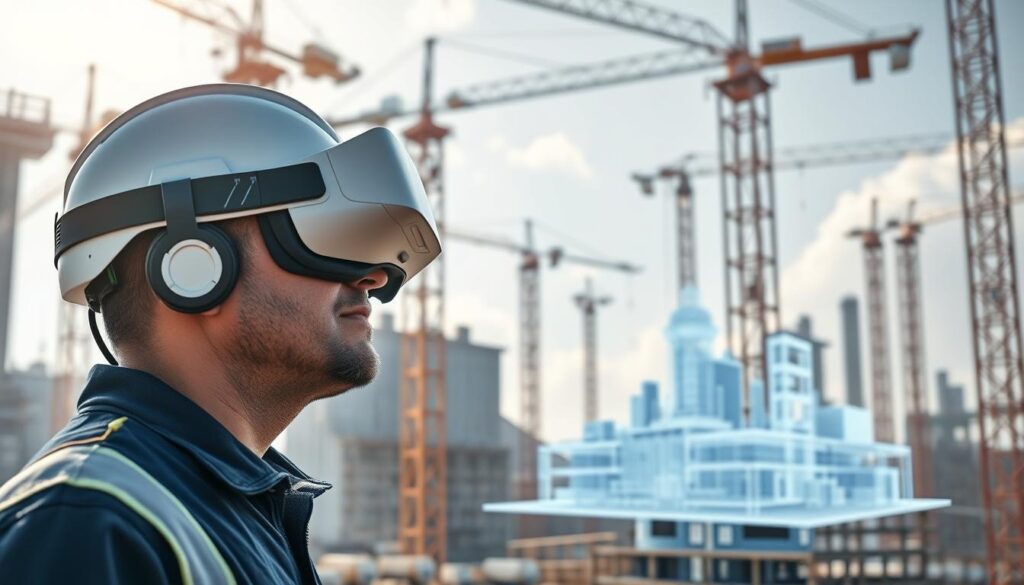
By incorporating VR/AR into construction safety training, we can elevate safety protocols on Canadian construction sites. Utilizing construction safety technology enables us to create a more interactive learning environment. This approach significantly boosts construction safety.
This article delves into the advantages of VR/AR in construction safety training. It highlights how these technologies can enhance safety standards in the industry.
The Current State of Construction Safety in Canada
In Canada’s construction sector, safety is a top priority. Traditional training methods often fail to meet the needs of workers. To address this, immersive safety training for construction is essential. It must prepare workers for the dangers they face on the job.
Key Safety Challenges Facing Canadian Construction Sites
Canadian construction sites grapple with significant safety issues. These include falls, accidents with heavy machinery, and exposure to harmful substances. Such risks not only endanger workers but also delay projects and increase costs. To tackle these problems, the industry is embracing vr/ar solutions for workplace safety. These technologies offer detailed training without the need for physical simulations.
- Falls from heights due to inadequate fall protection
- Accidents involving heavy machinery and equipment
- Exposure to hazardous materials and environments
Traditional Safety Training Methods and Their Limitations
Traditional safety training often involves classroom sessions or on-site demonstrations. While useful, these methods fall short in fully preparing workers for construction site dangers. The lack of interactivity and realism in these trainings can result in low engagement and retention among participants.
Also Read: How ATV & UTV Training Reduces Risks
To address these shortcomings, augmented reality in safety training is gaining traction. This technology creates immersive, interactive environments that mimic real-world scenarios. It enhances the learning experience and boosts retention rates.
My Experience with Safety Compliance in Canadian Construction
In my career in safety compliance, I’ve seen the challenges Canadian construction sites face. The need for effective, engaging safety training is evident. My experience confirms that using vr/ar solutions for workplace safety significantly improves compliance and reduces incidents.
- Conducting regular safety audits to identify potential hazards
- Implementing comprehensive training programs that include VR/AR components
- Monitoring and adjusting safety protocols based on feedback and incident reports
How to Boost Construction Safety with VR/AR Integration
VR and AR are more than just trends; they are transformative tools for construction safety training. They offer immersive and interactive learning experiences. By harnessing these technologies, construction companies can greatly improve their safety standards.
Understanding VR and AR Technologies for Construction
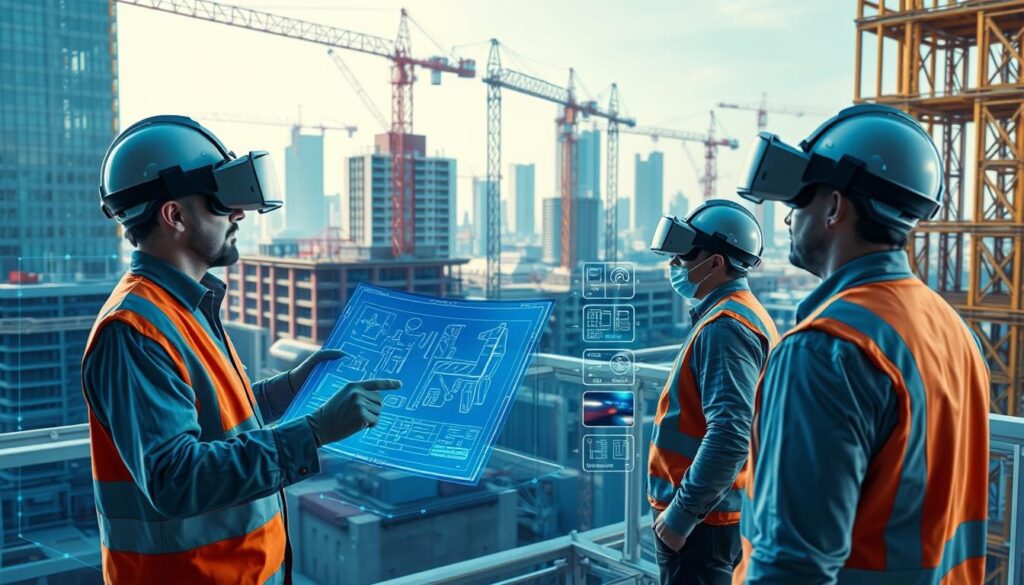
Virtual Reality (VR) creates a fully simulated environment, blocking out the physical world. Augmented Reality (AR) adds digital information to the real world. Both can revolutionize safety training, making it more engaging and effective.
Benefits of Immersive Learning Environments
Immersive learning environments, powered by VR and AR, bring several advantages to construction safety training. They enhance retention and engagement and allow for the simulation of dangerous scenarios in a risk-free environment.
Enhanced Retention and Engagement
Trainees are more likely to recall safety protocols when they are actively involved in learning. VR and AR make training more interactive. This improves knowledge retention and lowers the risk of accidents caused by forgetfulness or complacency.
Risk-Free Simulation of Hazardous Scenarios
VR/AR’s greatest benefit in safety training is simulating dangerous scenarios without risk. This enables the practice of emergency responses and safety procedures in a controlled setting.
My Approach to Implementing VR/AR Safety Solutions
Implementing VR/AR safety solutions requires a customized approach. It involves selecting the right technology, developing relevant training scenarios, and ensuring effective integration into safety protocols. This tailored approach is crucial for each construction project’s specific needs and challenges.
By embracing VR and AR, construction firms can proactively and innovatively enhance their safety training. This approach can significantly improve their safety record and reduce accident risks on site.
Implementing VR/AR Training Programs in Construction
The integration of VR/AR technology into construction safety training is transforming how workers learn to navigate dangerous environments. As a professional, I’ve witnessed the significant impact of effective training on reducing accidents and enhancing site safety.
Selecting the Right VR/AR Solutions for Your Construction Firm
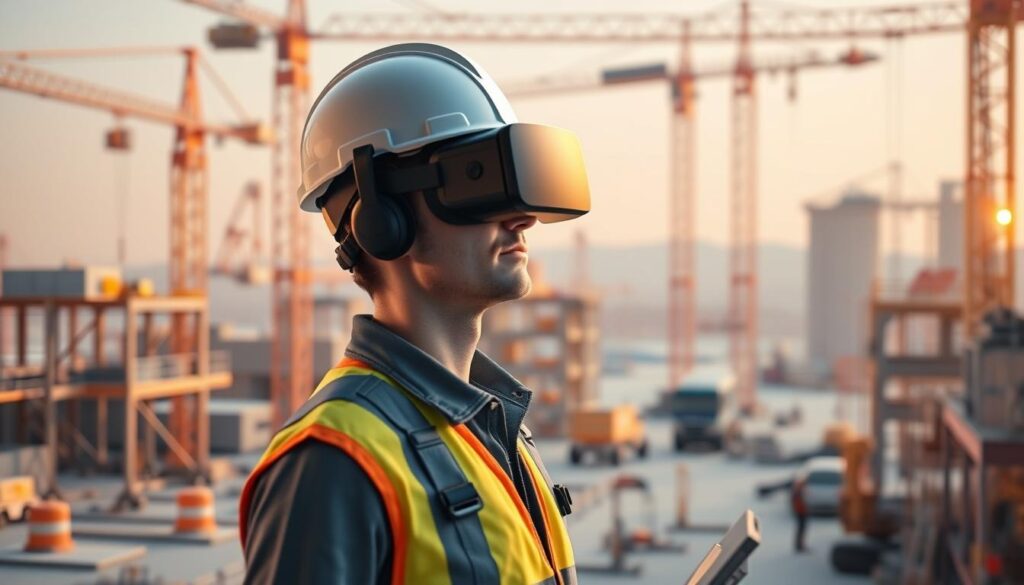
Choosing the right VR/AR technology for training is essential. Consider your firm’s project types, the safety challenges your workers face, and the level of interactivity needed. Construction safety technology has evolved, offering various VR/AR solutions for different needs.
VR systems can provide immersive experiences simulating complex construction environments. AR applications can overlay digital information on real-world settings, enhancing learning. Understanding each technology’s strengths and limitations helps in selecting the best VR/AR solutions for your training needs.
Developing Effective Training Scenarios for Common Hazards
Creating effective training scenarios is key to VR/AR program success. These scenarios should address common construction site hazards like working at heights and operating heavy machinery. Realistic and challenging training environments help workers develop necessary skills and confidence.
Training scenarios should also consider your workforce’s specific needs, such as language proficiency and job roles. Tailoring training to these factors ensures all workers receive relevant and impactful training, enhancing their ability to identify and mitigate hazards.
Integrating Advanced Safety Measures with VR Technology
Combining advanced safety measures with VR technology is a significant leap in construction safety training. VR allows for immersive, interactive training experiences that simulate real-world scenarios. This approach enhances learning and retention.
Hardware Requirements and Setup
Implementing VR training requires careful consideration of hardware and setup. This includes choosing the right VR headsets and configuring computer hardware. Ensuring a safe and comfortable training environment is crucial for a seamless experience.
Software and Content Development
Software and content development are vital for VR training programs. Creating high-quality, engaging training content tailored to your workforce’s needs is essential. Investing in well-designed software and content maximizes the effectiveness of VR training initiatives.
Real-World Applications and Canadian Success Stories
VR/AR integration is transforming construction safety training in Canada, leading to better outcomes. It’s making a significant impact on various construction safety aspects. This includes height safety training and equipment operation.
Case Study: Height Safety Training Using VR in Toronto Projects
In Toronto, a leading construction company introduced VR-based height safety training. This immersive experience allowed workers to practice navigating high-rise sites safely. It greatly reduced the risk of accidents.
The results were striking, with a 40% reduction in height-related incidents within six months. This was after the VR training program was implemented.
AR Applications for Construction Site Safety and Equipment Operation
AR technology is enhancing construction site safety by offering real-time information and guidance. For example, AR-enabled tablets provide visual aids for complex equipment operations. This improves both safety and efficiency.
AR is also being used for equipment operation training. It allows operators to see virtual overlays of machinery. This helps them understand the mechanics and safety protocols better.
How I’ve Measured Training Effectiveness and ROI for Clients
To gauge VR/AR training effectiveness, I monitor key performance indicators (KPIs). These include incident rates, training completion times, and worker confidence levels. The return on investment (ROI) is calculated by comparing costs saved through reduced incidents and improved efficiency against the investment in VR/AR technology.
| KPI | Pre-VR/AR Training | Post-VR/AR Training |
| Incident Rate | 10 per quarter | 6 per quarter |
| Training Completion Time | 5 days | 3 days |
| Worker Confidence Level | 80% | 95% |
By examining these metrics, it’s evident that VR/AR training boosts safety and offers a clear ROI for construction companies.
Overcoming Challenges in VR/AR Safety Training Implementation
As VR/AR solutions gain traction in workplace safety, Canadian construction firms face hurdles in their adoption. Integrating these technologies into safety training is fraught with challenges.
Technology Adoption Barriers in Canadian Construction
The Canadian construction industry’s reluctance to adopt VR/AR stems from perceived complexity and unfamiliarity. Resistance to change is prevalent, especially among smaller firms or those with traditional training methods. It’s crucial to demonstrate the tangible benefits of VR/AR in enhancing safety protocols and reducing workplace accidents.
The lack of standardization in VR/AR safety training programs is another barrier. Without a unified approach, companies struggle to find effective training solutions. Establishing industry standards and best practices can help address this issue.
Cost Considerations and Budget Planning for Small to Large Firms
The cost of implementing VR/AR safety training is a significant concern for all construction firms. Larger firms may have the budget, but smaller firms face resource allocation challenges. A cost-benefit analysis is essential to justify VR/AR investment by quantifying accident reduction and cost savings.
- Initial investment in VR/AR hardware and software
- Ongoing costs for content development and updates
- Training personnel to effectively use VR/AR technologies
For small to large firms, careful budget planning is vital for VR/AR safety training adoption. Exploring financing options, seeking government grants, and considering scalable solutions are necessary. This ensures the successful integration of VR/AR technologies.
Enhancing Safety Protocols with Virtual Reality: My Approach
In my experience, enhancing safety protocols with virtual reality requires a multi-step approach. First, identifying common hazards on construction sites is crucial. Then, developing realistic and immersive training scenarios that simulate real-world conditions significantly enhances the learning experience.
By leveraging VR/AR technologies, construction firms can improve safety outcomes and reduce training costs. As the industry evolves, embracing these technologies is essential for maintaining a competitive edge and ensuring a safer working environment.
Conclusion
The construction industry in Canada is undergoing significant changes. The integration of virtual reality in construction and augmented reality in safety training is becoming crucial. These technologies enhance safety protocols and offer immersive learning experiences to workers.
I’ve witnessed the transformative impact of VR/AR training on construction sites. It allows workers to practice handling real-world hazards in a safe space. This approach reduces accidents and boosts site safety.
The future of construction safety training is bright, thanks to VR/AR. As these technologies evolve, we’ll see more advanced training programs. They will simulate complex scenarios and offer personalized feedback to workers.
Canadian construction firms that adopt VR/AR in training will lead the way. They will ensure a safer work environment for their employees. The role of these technologies in shaping construction safety training’s future is undeniable.