
As a professional in workplace safety, I grasp the critical need for effective measures to prevent accidents. Ensuring a safe working environment is paramount.
Workplace safety is a top priority in Canada. Industries must follow strict legislation to reduce risks from workplace hazards.
In my experience, a comprehensive approach to fall prevention programs is essential. It helps in reducing the risk of falls and related injuries.
This article will delve into the key components for a safe working environment. We will focus on Canadian legislation and industry best practices.
Understanding the Risks of Workplace Falls
Workplace falls pose a significant threat in Canadian workplaces, requiring a deep understanding of their causes and effects. These incidents, whether from heights or on the same level, can lead to severe injuries, fatalities, and substantial economic losses.
Common Causes of Workplace Falls in Canada
Several factors contribute to workplace falls in Canada. These include:
- Slippery or uneven surfaces
- Inadequate guardrails or barriers
- Poor lighting or visibility
- Equipment failure or misuse
Reports indicate these hazards are widespread across industries like construction, manufacturing, and warehousing. Preventing falls demands proactive identification and mitigation of these risks.
The Impact of Falls on Workers and Businesses
The effects of workplace falls are profound, impacting both workers and businesses. Workers may endure physical injuries, emotional trauma, and long-term health problems. Businesses, on the other hand, face decreased productivity, higher insurance premiums, and potential legal issues.
Effective fall protection equipment and training are essential in reducing these risks. By prioritizing workplace safety, businesses can lower the occurrence of falls and their associated costs.
Fall Protection Strategies: Equipment, Training and Policies You Can’t Skip
To prevent workplace falls, employers must adopt a comprehensive strategy. This includes equipment, training, and policies. Effective fall protection requires a multi-faceted approach. It must incorporate prevention, protection, and response measures.
The Three-Pillar Approach to Fall Protection
The three-pillar approach to fall protection involves prevention, protection, and response. Prevention measures include eliminating or minimizing fall hazards through design and engineering controls. Protection involves using personal fall arrest systems, guardrails, and safety nets to safeguard workers. Response measures ensure that employers are prepared to react effectively in case of a fall emergency.
As emphasized by industry experts, “A comprehensive fall protection program is only as strong as its weakest link.” This underscores the importance of integrating all three pillars to ensure a robust fall protection strategy.
Integrating Prevention and Response Measures
Integrating prevention and response measures is critical for a successful fall protection program. Employers should provide regular fall protection training to employees. This ensures they understand how to use equipment correctly and respond in emergency situations. This includes training on the proper use of personal fall arrest systems and conducting regular equipment inspections.
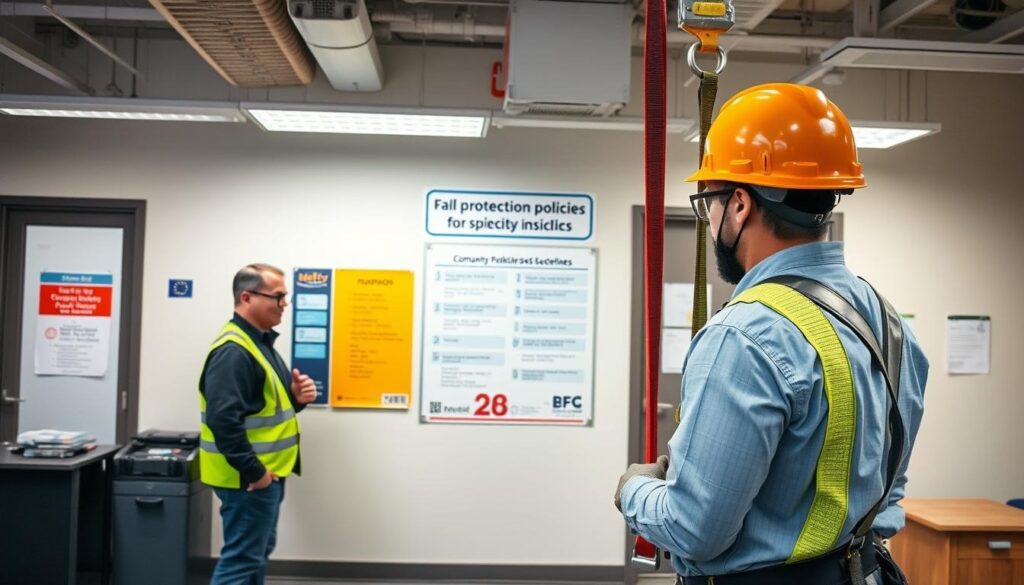
By combining prevention measures, such as hazard elimination and engineering controls, with effective response planning, employers can significantly reduce the risk of workplace falls. As noted by safety professionals, “Prevention is key, but being prepared for emergencies is equally important.”
Essential Fall Protection Equipment
Effective fall protection equipment is vital for safeguarding workers in various industries across Canada. The right equipment prevents falls and protects workers from hazards, ensuring a safe work environment.
Personal Fall Arrest Systems
Personal Fall Arrest Systems (PFAS) are a critical component of fall protection. These systems include a harness, lanyard, and anchorage point, designed to arrest a fall and prevent injury. PFAS are particularly useful in situations where guardrails or other forms of fall protection are not feasible.
Guardrails and Safety Nets
Guardrails and safety nets are passive fall protection measures. They provide a barrier between workers and potential fall hazards. Guardrails are typically used on scaffolding, stairways, and other elevated areas. Safety nets are often used in construction and other industries where workers are at risk of falling from heights.
Anchorage Points and Connectors
Anchorage points and connectors are vital components of fall protection systems. Anchorage points provide a secure attachment for lanyards and other fall protection equipment. Connectors link the equipment to the worker’s harness. It’s essential to ensure that anchorage points and connectors are durable, reliable, and compliant with relevant legislation.
Innovations in Fall Protection Technology
The fall protection industry is witnessing significant innovations. Wearable devices and fall detection systems are enhancing the effectiveness of fall protection equipment. These technologies provide additional safety features, such as automatic fall detection and alert systems. Employers can leverage these advancements to improve workplace safety and reduce the risk of falls.
Also Read: How ATV & UTV Training Reduces Risks
Selecting and Maintaining Fall Protection Equipment
To minimize the risk of falls, it’s essential to choose and maintain appropriate fall protection equipment. The effectiveness of fall protection measures largely depends on the quality and suitability of the equipment used.
Assessing Workplace Hazards
Before selecting fall protection equipment, it’s crucial to assess the workplace hazards. This involves identifying potential fall risks, evaluating the height of work surfaces, and determining the type of work being performed. A thorough hazard assessment helps in choosing the right equipment for specific tasks.
Equipment Inspection Protocols
Regular inspection of fall protection equipment is vital to ensure its integrity and effectiveness. Employers should establish protocols for inspecting equipment before and after use, checking for signs of wear, damage, or deterioration. Documentation of these inspections is also crucial for maintaining compliance with safety legislation.
Maintenance and Replacement Schedules
Maintaining fall protection equipment according to manufacturer guidelines and legislative standards is essential. This includes creating schedules for routine maintenance and replacement of equipment. A well-maintained piece of equipment can be the difference between safety and catastrophe.
| Equipment Type | Inspection Frequency | Maintenance Action |
| Personal Fall Arrest Systems | Before and after each use | Clean, store properly, replace worn parts |
| Guardrails | Daily and after setup | Tighten loose fittings, replace damaged components |
| Safety Nets | Weekly and after impact | Inspect for tears, repair or replace as needed |
“The proper selection and maintenance of fall protection equipment are critical components of a comprehensive fall prevention program.”
By following these guidelines, employers can significantly reduce the risk of falls in the workplace, ensuring a safer environment for all employees.
Comprehensive Fall Protection Training Programs
Comprehensive fall protection training programs are essential for educating employees on fall risks and prevention measures. These programs are vital for workplace safety. They ensure employees are equipped with the knowledge and skills to prevent falls.
Effective training goes beyond mere compliance. It’s about giving employees the tools to identify hazards and use equipment correctly. A comprehensive program should include several key elements.
Core Training Components
The foundation of any fall protection training program lies in its core components. These include hazard recognition, equipment usage, and emergency response procedures. Employees must understand how to identify potential fall hazards, properly use fall protection equipment, and respond in case of an emergency.
- Hazard recognition: Identifying potential fall hazards in the workplace.
- Equipment usage: Proper use and inspection of fall protection equipment.
- Emergency response: Procedures to follow in case of a fall or equipment failure.
Hands-On Practice and Simulations
Hands-on practice and simulations are critical for reinforcing theoretical knowledge. By practicing in a controlled environment, employees can develop the necessary skills to use fall protection equipment effectively. This practical training also helps to build confidence and competence.
“The most effective training programs incorporate hands-on practice, allowing employees to apply theoretical knowledge in real-world scenarios.”
Refresher Training Requirements
Refresher training is essential to maintain employee proficiency and adapt to changing workplace conditions. Regular refresher courses ensure that employees remain competent in using fall protection equipment and are updated on new procedures or equipment.
| Training Component | Initial Training | Refresher Training |
| Hazard Recognition | Detailed instruction | Annual review |
| Equipment Usage | Practical demonstration | Bi-annual practice |
| Emergency Response | Simulation exercises | Quarterly drills |
In conclusion, a comprehensive fall protection training program is multifaceted. It includes core training components, hands-on practice, and regular refresher training. By investing in such a program, employers can significantly reduce the risk of falls in the workplace.
Developing Effective Fall Protection Policies
Creating an effective fall protection policy demands a deep grasp of workplace hazards and legal mandates. As we explore fall protection, it’s evident that a well-designed policy is essential for a safe workplace.
Key Elements of a Fall Protection Policy
A solid fall protection policy encompasses several key elements. It begins with a detailed hazard assessment to pinpoint fall risks. This step is followed by the choice of suitable fall protection gear and the creation of training for staff.
| Policy Element | Description |
| Hazard Assessment | Identifying potential fall hazards in the workplace |
| Equipment Selection | Choosing the right fall protection equipment for the job |
| Training Programs | Educating employees on fall protection procedures and equipment use |
Roles and Responsibilities in Policy Implementation
It’s vital to clearly outline roles and responsibilities for a fall protection policy’s success. Employers must ensure all staff know their roles and are responsible for following the policy.
Emergency Response Planning
An effective fall protection policy must include a comprehensive emergency response plan. This plan details the steps to take in case of a fall, aiming for a swift and effective response to reduce injury.
Canadian Legislation and Compliance
Understanding the legislative framework for fall protection in Canada is crucial for a safe workplace. Employers must grasp the various legislation and standards for fall protection. This ensures compliance and avoids penalties.
Provincial and Federal Requirements
Canada’s fall protection laws are set by both provinces and the federal government. Employers need to follow the specific laws of their area. This includes the Occupational Health and Safety Legislation under federal law or the Occupational Health and Safety Act in provinces. Knowing these rules is key to effective fall protection.
Documentation and Record-Keeping
Keeping accurate records is essential for fall protection compliance. Employers must document equipment inspections, training, and incident reports. This proves compliance and helps improve safety measures.
Consequences of Non-Compliance
Not following Canadian fall protection laws can lead to severe consequences. These include fines, penalties, and damage to reputation. Employers must act proactively to ensure compliance and safety.
Conclusion
Implementing comprehensive fall protection strategies is essential for workplace safety and accident prevention. Understanding the risks of workplace falls and using the right equipment, training, and policies is key. Employers must ensure a safe working environment.
A multi-faceted approach to fall protection includes personal fall arrest systems and guardrails. Regular equipment inspections and maintenance are also crucial. Comprehensive training programs and clear policies are vital for fall prevention.
I stress the importance of ongoing training, regular equipment maintenance, and adherence to legislation. These measures foster a culture of safety in the workplace. By adopting these strategies, employers can significantly reduce fall risks and create a safer work environment.