
Training for off-road vehicles in industrial settings is vital for ensuring the safety of operators and personnel. In Canada, the growing use of these vehicles on job sites has heightened concerns about risks.
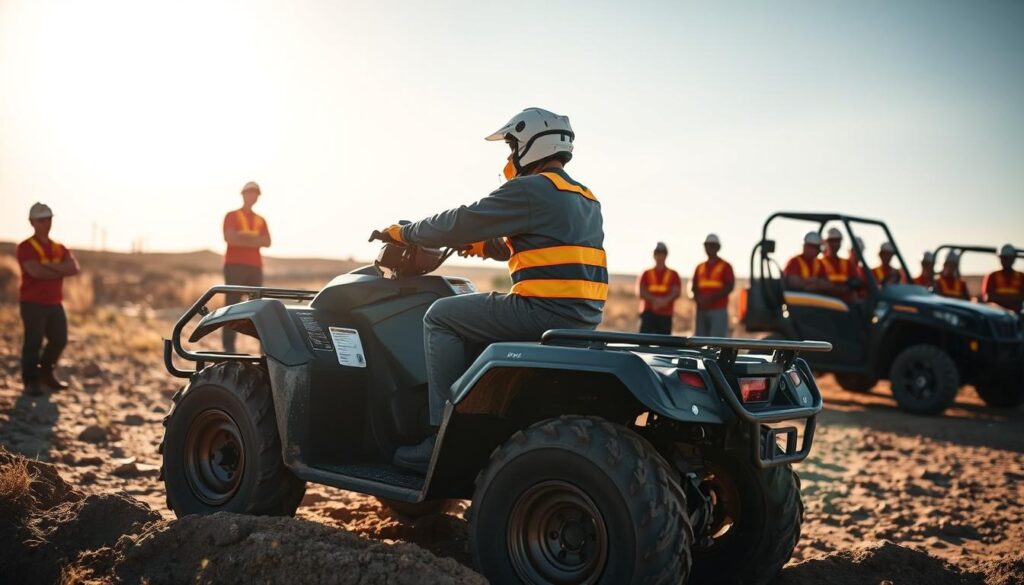
I will delve into the importance of comprehensive training programs and their role in reducing risks. Effective risk management strategies are critical for accident prevention and maintaining a safe work environment.
Understanding and mitigating risks can lead to a safer workplace. This article will examine current safety practices in Canada. It will also underscore the significance of proper training.
The Growing Importance of Off-Road Vehicles in Canadian Industrial Settings
In Canada’s vast and varied industrial landscapes, off-road vehicles have become crucial. ATVs and UTVs are key for navigating tough terrains. They boost productivity and efficiency across various sectors.
Essential Applications in Remote Work Environments
Off-road vehicles shine in remote work settings like mining, forestry, and construction. They help transport people, equipment, and materials over difficult terrains. This ensures smooth operations. Key uses include:
- Transporting personnel to and from work sites
- Carrying equipment and materials
- Conducting site inspections and surveys
Operational Benefits and Safety Challenges on Job Sites
Off-road vehicles bring many benefits but also pose safety risks. Risks include accidents, injuries, and fatalities from rollovers, collisions, or other hazards. To tackle these risks, strong safety measures are vital. These include:
- Regular vehicle maintenance and inspection
- Comprehensive operator training programs
- Site-specific hazard identification and mitigation strategies
Understanding ATV UTV Safety, Risk Management, and Remote Site Safety
Managing risks from ATV and UTV use is crucial for reducing workplace accidents. These vehicles are now common in Canadian industries like construction and utilities. They are also used in remote work environments.
Critical Risk Factors in Industrial Off-Road Vehicle Operation
Several key risks are linked to ATV and UTV use in industrial settings. These include terrain-related hazards, vehicle malfunctions from poor maintenance, and human errors from lack of training or experience.
Statistical Analysis of ATV/UTV Incidents in Canadian Workplaces
Studies on ATV and UTV incidents in Canadian workplaces highlight the need for thorough training and risk management. The data shows that most incidents are due to operator mistakes and poor safety measures.
| Cause of Incident | Percentage of Total Incidents |
| Operator Error | 45% |
| Inadequate Safety Protocols | 25% |
| Vehicle Malfunction | 15% |
| Terrain-Related Issues | 15% |
Navigating Canadian Legislation and Standards for Workplace ATV/UTV Use
Understanding the complex rules for ATV and UTV use in Canadian workplaces is key to safety and compliance. Employers must grasp the various legislations and standards that apply to these vehicles.
Provincial Differences in Off-Road Vehicle Safety Requirements
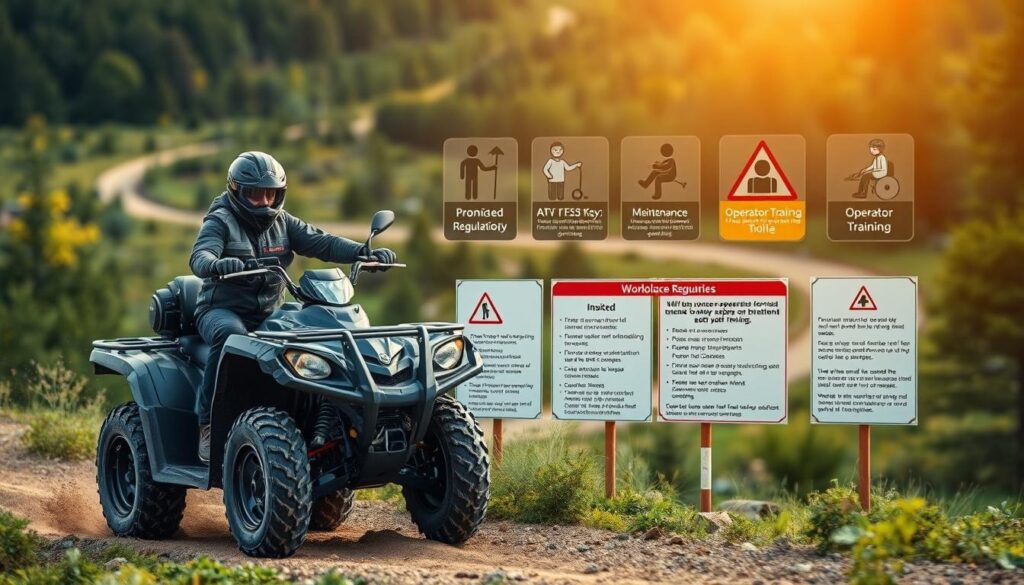
Canadian provinces have their own rules on ATV and UTV safety. For example, some provinces require helmets and protective gear, while others demand specific training for operators. It’s crucial for employers to know the specific legislation in their area to meet compliance.
Industry-Specific Guidelines and Compliance Strategies
Different industries have unique guidelines for ATV and UTV use. Employers need to keep up with the latest safety standards and adopt effective compliance strategies. This includes creating safety procedures suited to their workplace and conducting regular hazard identification assessments to reduce risks.
By following this legislation and these guidelines, employers can greatly lower the risk of accidents. This ensures a safer work environment for employees operating ATVs and UTVs.
Building Effective ATV & UTV Training Programs for Maximum Risk Reduction
A well-structured training program is crucial for safe ATV and UTV operation in industrial settings. Employers must invest in comprehensive training that covers both theoretical knowledge and practical skills. This approach is key to achieving maximum risk reduction.
Operator Certification and Qualification Requirements
Operators must undergo rigorous certification processes to ensure they are qualified to operate ATVs and UTVs safely. They need to understand safety legislation and guidelines specific to their work environment.
Practical Skills Development and Assessment
Practical training is essential for developing the skills necessary to navigate challenging terrains and work conditions. Operators should be assessed on their ability to apply safety guidelines in real-world scenarios.
Site-Specific Hazard Identification and Mitigation
Training programs must include site-specific hazard identification to prepare operators for the unique challenges of their work environment. This includes understanding how to mitigate risks associated with terrain, weather, and other factors.
| Training Component | Description | Benefits |
| Operator Certification | Rigorous certification process for ATV/UTV operators | Ensures operators are qualified and knowledgeable about safety legislation |
| Practical Skills Training | Hands-on training for navigating challenging terrains | Develops skills necessary for safe operation in real-world scenarios |
| Site-Specific Hazard Training | Training on identifying and mitigating site-specific hazards | Prepares operators for the unique challenges of their work environment |
Customizing Safety Procedures for Diverse Work Environments
Diverse work environments require tailored safety protocols to manage ATV and UTV risks. Each workplace has unique hazards, demanding a detailed safety approach.
Remote Site Protocols and Communication Systems
Remote sites often lack the infrastructure of urban areas. Therefore, strong communication systems are essential. Using satellite phones or two-way radios ensures team connectivity and quick emergency response.
Construction Site Traffic Management and Coordination
Construction sites are dynamic, with various vehicles and personnel. Effective traffic management is key. It involves separating ATV/UTV paths, using clear signs, and coordinating through spotters or traffic controllers.
Utility Corridor Access and Special Considerations
Utility corridors pose unique challenges, like narrow paths and encounters with other workers. It’s crucial to equip ATVs/UTVs with warning lights and train operators on corridor-specific hazards.
Customizing safety procedures for each work environment significantly reduces accident risks. This ensures a safer workplace for all.
Implementing Rigorous Equipment Inspection and Maintenance Protocols
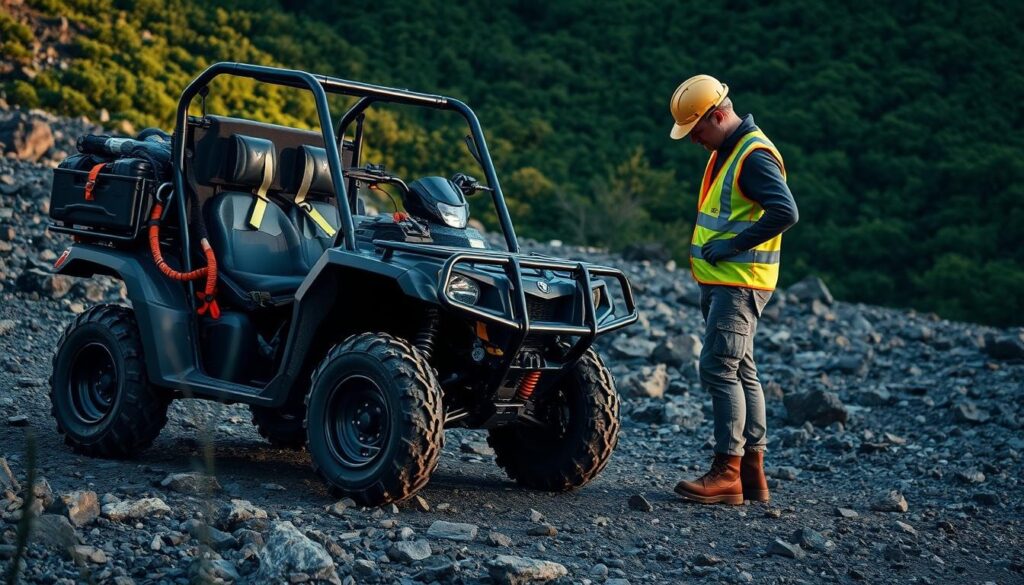
To ensure the safe operation of ATVs and UTVs, rigorous equipment inspection and maintenance protocols are essential. This is particularly crucial in remote and challenging work environments where the risk of accidents can be higher.
Also Read: Top 5 Construction Safety Courses in 2025
Comprehensive Pre-Operation Inspection Procedures
Before each use, ATVs and UTVs should undergo thorough inspections. This includes checking tire pressure, brakes, steering, and other critical components. Operators should be trained to identify potential issues and report them for maintenance.
Preventative Maintenance Schedules and Documentation Requirements
Regular maintenance is key to preventing equipment failure. Schedules should be established based on manufacturer recommendations and usage. Documentation of maintenance activities is also crucial for compliance and safety audits. This includes records of repairs, replacements, and routine checks.
By implementing these protocols, employers can significantly reduce the risk of accidents related to off-road vehicle safety. This ensures a safer working environment, particularly in remote sites.
Real-World Success: Canadian Case Studies in ATV/UTV Safety Excellence
Canadian case studies reveal the impact of ATV and UTV safety training on workplace risks. Two examples stand out, showcasing the success of thorough safety programs in risky sectors.
Northern Mining Operation Risk Reduction Results
A northern mining operation introduced a strict ATV and UTV training regimen. This led to a significant reduction in accidents. The training covered equipment operation, hazard recognition, and emergency response. Consequently, the operation witnessed a 40% decrease in ATV-related incidents over two years.
Provincial Utility Company’s Safety Transformation Journey
A provincial utility company embarked on a safety transformation by standardizing ATV and UTV safety protocols. The effort included regular training sessions and strict maintenance schedules for all-terrain vehicles. This led to a notable improvement in workplace safety, with a 25% reduction in UTV-related injuries in the first year.
These case studies underscore the critical role of comprehensive ATV and UTV training in boosting workplace safety. By embracing robust safety measures, Canadian industries can drastically cut the risks tied to off-road vehicle use.
Conclusion:
Investing in comprehensive ATV and UTV safety training is essential for lowering risks in Canadian industrial off-road settings. It ensures a safe work environment for employees and reduces potential hazards. Employers who prioritize such training can significantly enhance workplace safety.
Effective safety protocols are key to achieving this goal. Implementing strict safety measures, like regular equipment checks and maintenance, can greatly lower accident rates. This, in turn, boosts productivity and efficiency.
Assessing the return on investment in ATV and UTV safety training requires evaluating its impact on workplace safety, productivity, and adherence to legislation. This approach helps employers refine their safety training and procedures. It ensures they maximize risk reduction and maintain a safe work environment.