
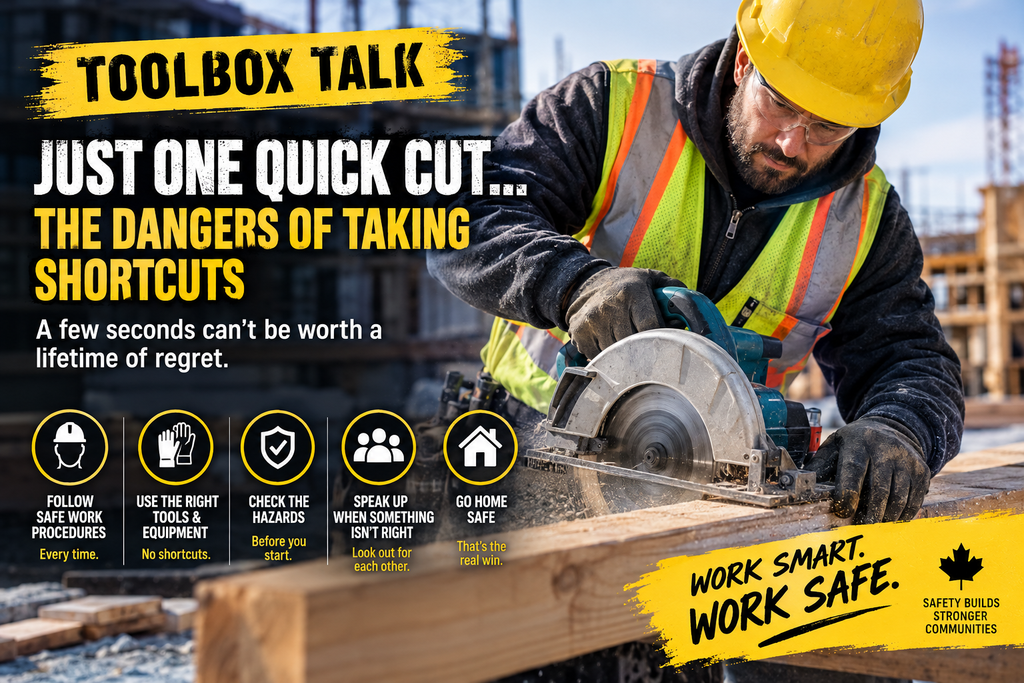
We’ve all been there. You’re halfway through a task, the crew is busy, the deadline is approaching, and you think, “I’ll just do this quickly. It’ll only take a second.”
Maybe it’s making one quick cut without securing the material, removing a machine guard because it’s in the way, skipping a step in a safety procedure, or using a tool for something it wasn’t designed to do.
These moments might seem harmless, but some of the most serious workplace injuries can begin with a decision that was supposed to save a few seconds.
The reality is simple: No task is so urgent that it’s worth risking a life-changing injury.
Why Do Workers Take Shortcuts?
Shortcuts don’t always happen because someone doesn’t care about safety. Often, they’re the result of everyday pressures on a construction site.
Workers may feel pressure to keep up with production, meet deadlines, avoid holding up other trades, or finish a task before the end of a shift. Experienced workers can also become comfortable with familiar tasks and underestimate the risks.
Over time, unsafe practices can become normalized. When someone repeatedly sees a shortcut taken without consequences, it can start to feel like an acceptable way of working.
But experience doesn’t eliminate hazards, and familiarity doesn’t make an unsafe task safe.
Common Shortcuts That Can Lead to Serious Injuries
Here are a few examples of unsafe shortcuts that can happen on construction sites:
1. Making a quick cut: Operating a saw without the required guarding, securing the material, or following the manufacturer’s safe operating instructions can expose workers to severe cuts, amputations, and flying debris.
2. Skipping fall protection: Taking a quick step onto an unprotected edge or working at height without the required fall protection measures can have devastating consequences.
3. Working on energized equipment: Skipping proper isolation and lockout procedures to save time can expose workers to electric shock, burns, or unexpected equipment movement.
4. Improvising with tools: Using the wrong tool, damaged equipment, or makeshift solutions can introduce hazards that were never part of the original task.
5. Skipping housekeeping: Leaving debris, cords, or materials in walkways because you’ll clean them up later creates unnecessary slip and trip hazards for everyone.
These examples are reminders that the right safety precautions must be in place before work begins, not after something goes wrong.
Five Ways to Avoid Dangerous Shortcuts
1. Take a moment to assess the task. Before starting, identify the hazards, understand the work procedure, and make sure the necessary controls are in place. If conditions change, reassess the work.
2. Use the right tools and equipment. Inspect tools before use, follow manufacturer instructions, and never bypass guards or safety devices.
3. Follow safe work procedures every time. Whether it’s working at heights, cutting material, or servicing equipment, don’t skip required safety steps because a task seems simple or familiar.
4. Speak up when something isn’t right. If you notice an unsafe shortcut, address it respectfully and promptly. Stop or pause the affected work when necessary, following site procedures, and notify the supervisor.
5. Plan the work realistically. Supervisors and employers should ensure workers have appropriate training, equipment, time, and resources to complete tasks safely. Production pressure should never encourage unsafe behaviour.
Toolbox Talk Discussion: Let’s Talk About It
Take five minutes with your crew to discuss the following questions:
- Have you ever felt pressured to take a shortcut to get a job done faster?
- What are some shortcuts you’ve seen on construction sites that could lead to an injury?
- Why do workers sometimes ignore safety procedures, even when they know better?
- What should you do if a coworker is taking an unnecessary risk?
- Is there anything about today’s work that needs to be changed to make it safer?
Encourage honest discussion. The goal isn’t to blame anyone. It’s to identify risks, learn from experience, and prevent injuries before they happen.
Today’s Safety Takeaway
Construction work requires efficiency, skill, and hard work. But working safely is part of doing the job properly.
A few extra seconds spent securing material, inspecting equipment, setting up fall protection, or following an established procedure can make all the difference.
Work smart. Work safe. And remember: The goal isn’t just to finish the job. It’s to make sure everyone goes home safely.
Supervisor Reminder: Before work begins, review the task-specific hazards, applicable safe work procedures, required protective equipment, and emergency arrangements with your crew. Confirm workers understand the controls and have what they need to perform the work safely.
This toolbox talk is intended as general safety awareness material and does not replace required training, site-specific hazard assessments, safe work procedures, or applicable provincial and territorial occupational health and safety requirements.