
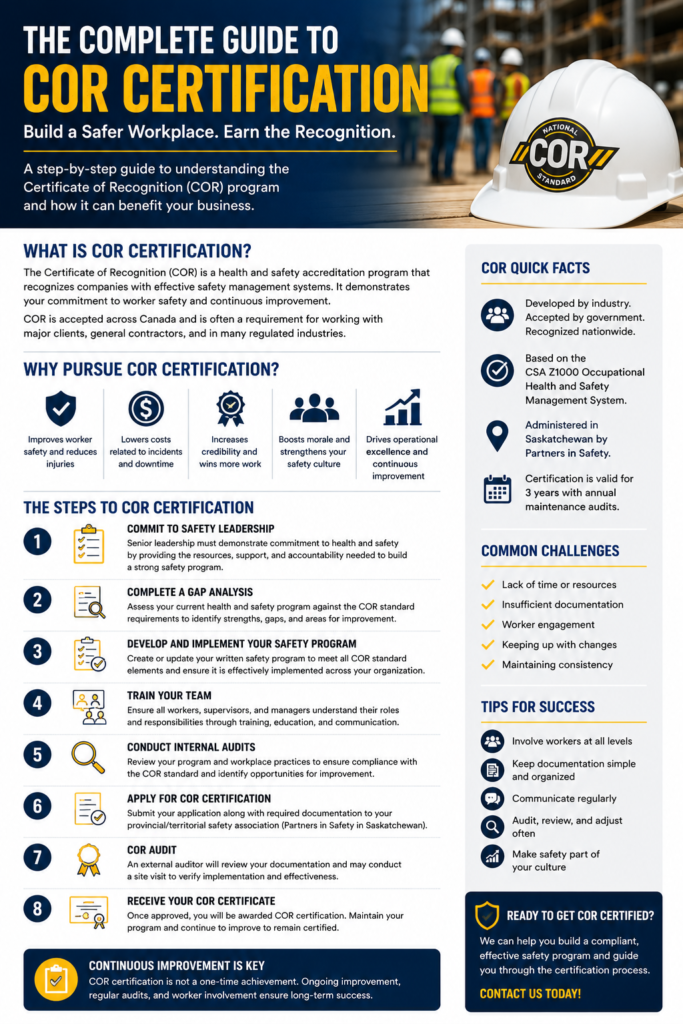
The Complete Guide to COR Certification
If your company works in construction, industrial services, manufacturing, or other high-risk industries, you’ve likely heard of COR Certification. Many clients and general contractors now require it before they’ll even consider awarding a contract.
But what exactly is COR Certification? Why is it important? And how can your business become certified?
This guide explains everything you need to know about the Certificate of Recognition (COR) program and how it can help improve workplace safety while giving your company a competitive advantage.
What is COR Certification?
The Certificate of Recognition (COR) is a nationally recognized occupational health and safety accreditation program that demonstrates an employer has developed and implemented a comprehensive safety management system.
While the specific administration of COR varies by province, the goal remains the same: to reduce workplace injuries through effective safety programs, employee involvement, hazard management, and continuous improvement.
Achieving COR certification shows clients, employees, and regulators that your organization is committed to maintaining a safe and healthy workplace.
Why is COR Certification Important?
Many organizations view COR certification as more than just a safety credential—it’s a business advantage.
Companies with COR certification often experience:
- Fewer workplace injuries
- Lower workers’ compensation costs
- Reduced downtime
- Improved employee morale
- Better compliance with occupational health and safety legislation
- Greater success when bidding on contracts
- Increased confidence from clients and partners
Many municipalities, government agencies, and large industrial contractors require COR certification before allowing companies to bid on projects.
Which Industries Benefit Most from COR?
COR certification is especially valuable for businesses operating in higher-risk industries, including:
- Construction
- Electrical contractors
- Mechanical contractors
- Oil and gas
- Mining
- Transportation
- Manufacturing
- Forestry
- Utilities
- Heavy equipment operations
Even businesses outside these industries can benefit by implementing the same safety management principles.
What Does a COR Safety Program Include?
A COR-compliant safety management system typically includes several key elements designed to identify hazards, reduce risks, and continuously improve workplace safety.
Common components include:
Health and Safety Policy
A written commitment from management outlining the company’s safety expectations and responsibilities.
Hazard Assessments
Processes for identifying workplace hazards before work begins and implementing appropriate controls.
Safe Work Procedures
Written procedures that explain how specific tasks should be completed safely.
Employee Training
Documented training that ensures workers understand workplace hazards and safe operating procedures.
Incident Reporting and Investigation
A system for reporting injuries, near misses, and property damage while identifying root causes to prevent future incidents.
Inspections
Regular workplace inspections help identify hazards before they result in injuries.
Emergency Preparedness
Emergency response plans ensure workers know what to do during fires, medical emergencies, chemical spills, or other unexpected events.
Management Commitment
Leadership involvement is one of the most important factors in a successful safety program.
Steps to Achieving COR Certification
Although requirements vary slightly between provinces, the certification process generally follows these steps.
Step 1: Commit to Workplace Safety
Leadership must support the safety program by providing the necessary time, resources, and accountability.
Step 2: Conduct a Gap Analysis
Compare your existing safety program against COR requirements to identify areas that need improvement.
Step 3: Develop Your Safety Program
Create or update your safety manual, procedures, forms, policies, inspection processes, and training records.
Step 4: Train Your Employees
Workers, supervisors, and managers should understand both their responsibilities and the company’s safety expectations.
Step 5: Implement the Program
A safety program only works if it is consistently followed. Documentation, inspections, meetings, and hazard assessments should become part of daily operations.
Step 6: Perform an Internal Audit
Before applying for certification, conduct an internal audit to verify compliance and identify any deficiencies.
Step 7: Complete the COR Audit
An external auditor reviews your documentation and may perform a site visit to verify that your safety management system is functioning effectively.
Step 8: Receive Your Certification
Once all requirements have been successfully met, your organization receives COR certification.
Common Challenges During COR Certification
Many businesses delay certification because they assume the process is overwhelming.
Some of the most common obstacles include:
- Limited time
- Incomplete documentation
- Lack of employee participation
- Inconsistent inspections
- Poor record keeping
- Outdated safety manuals
- Difficulty understanding audit requirements
The good news is that these challenges can be overcome with the right guidance and a structured implementation plan.
Tips for Maintaining COR Certification
Receiving your certificate is only the beginning.
To maintain certification, companies should:
- Review their safety program regularly.
- Keep training records current.
- Conduct routine inspections.
- Investigate all incidents and near misses.
- Hold regular safety meetings.
- Update procedures when regulations or work processes change.
- Encourage employee participation in safety initiatives.
- Complete annual maintenance requirements as required by your certifying organization.
Continuous improvement is a key principle of the COR program.
How COR Certification Benefits Your Business
Companies that invest in workplace safety often see measurable returns.
Benefits can include:
- Lower insurance and WCB costs
- Increased productivity
- Fewer project delays
- Higher employee retention
- Improved company reputation
- Better compliance with safety legislation
- Greater eligibility for larger contracts
A strong safety culture can also improve employee morale and demonstrate professionalism to clients.
We Can Help You Achieve COR Certification
Building a COR-compliant safety management system takes time, expertise, and attention to detail—but you don’t have to do it alone.
Our team works with businesses to develop customized safety programs, prepare documentation, conduct internal audits, and guide organizations through every stage of the COR certification process.
Whether you’re starting from scratch or preparing for your next audit, we can help simplify the process and set your company up for long-term success.
Contact us today to learn how we can help your business achieve COR Certification and build a safer, more productive workplace.