
Handling flammable liquids demands a deep grasp of the dangers and the steps to avoid them. I stress the need for proper training in managing hazardous materials at work.
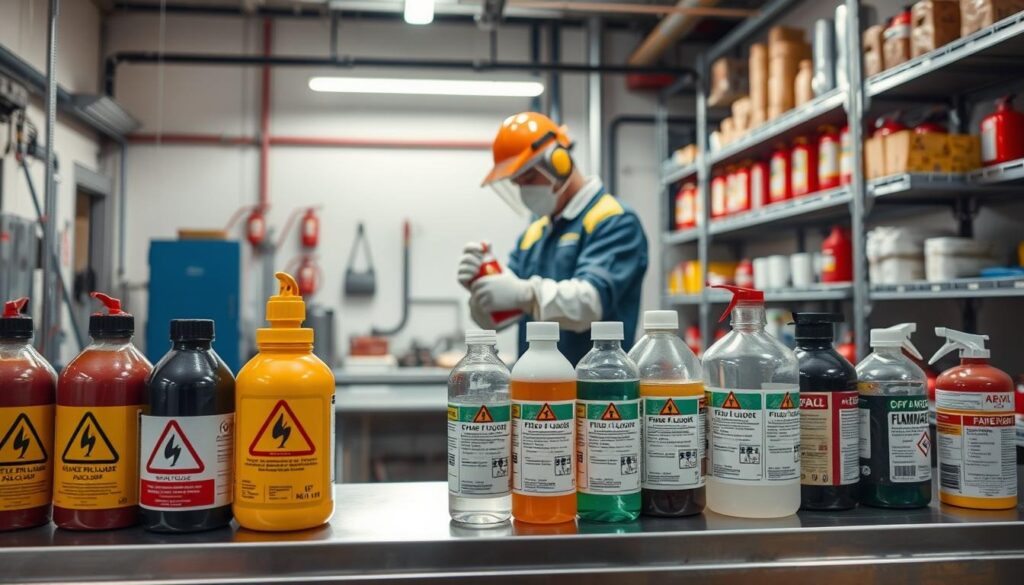
Not handling these substances correctly can cause serious issues, like accidents and injuries. It’s vital to follow safety guidelines to avoid such problems. This way, everyone can work in a safe space.
From my perspective, knowing and applying flammable liquid safety rules is more than a legal duty. It’s a moral duty to safeguard lives and property.
Understanding Flammable Liquids and Their Hazards
It’s vital to grasp the dangers of flammable liquids for workplace safety. These substances can ignite and burn easily, threatening both people and property.
What Qualifies as a Flammable Liquid?
A flammable liquid is any liquid with a flash point at or below 93°C (199.4°F). They are volatile and can ignite quickly. Examples include gasoline, alcohol, and some cleaning solvents.
Common Flammable Liquids in Canadian Workplaces
In Canada, workplaces often deal with liquids like gasoline, diesel fuel, and industrial solvents. These are used across various sectors, including manufacturing, transportation, and construction.
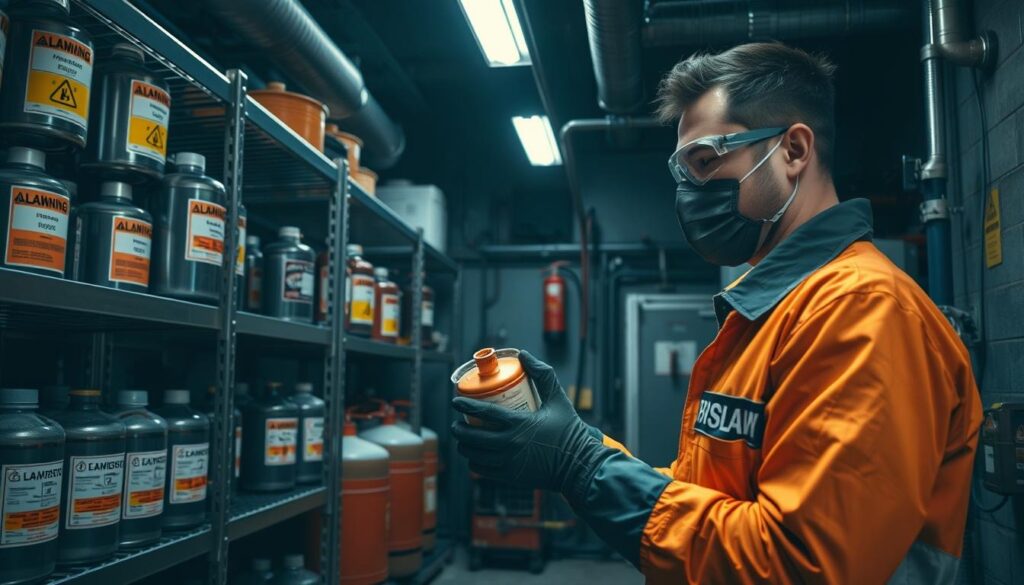
Potential Dangers and Risk Factors
Handling flammable liquids comes with several risks. These include fire and explosion hazards, as well as health risks from exposure.
Fire and Explosion Hazards
Flammable liquids can vaporize and mix with air to form explosive mixtures. Sparks or open flames can ignite these vapors, leading to fires or explosions.
Health Risks from Exposure
Exposure to flammable liquids can cause health problems. These include skin irritation, respiratory issues, and systemic effects from inhalation or skin contact.
| Hazard Type | Risk Factors | Prevention Measures |
| Fire and Explosion | Ignition sources, vapor accumulation | Proper ventilation, elimination of ignition sources |
| Health Risks | Skin contact, inhalation | Personal protective equipment, safe handling practices |
Safety experts stress the importance of proper training and following safety protocols. This is key to reducing risks from flammable liquids.
Workplace Safety: Handling Flammable Liquids Properly
The safe handling flammable liquids is a critical aspect of workplace safety. It requires careful attention to detail. To minimize risks, it’s essential to follow established safety procedures and guidelines.
Required Personal Protective Equipment
When handling flammable liquids, wearing the right personal protective equipment (PPE) is crucial. This includes protective gloves, eyewear, and clothing that can resist ignition sources.
Gloves, Eyewear, and Clothing Selection
Selecting the appropriate PPE involves considering the type of flammable liquid being handled. For instance:
- Gloves should be resistant to the specific chemical being used.
- Eyewear should provide comprehensive protection against splashes.
- Clothing should be made from materials that are less likely to ignite or melt when exposed to flames.
Respiratory Protection Guidelines
In environments where flammable liquids are used, there’s also a risk of inhaling harmful vapors. Respiratory protection is vital in such cases. The guidelines for respiratory protection include:
- Using respirators that are certified for the specific hazard present.
- Ensuring a proper fit to prevent leakage.
- Regularly inspecting and maintaining respirators.
Safe Handling Procedures and Best Practices
Safe handling procedures for flammable liquids involve a combination of proper training, equipment, and adherence to safety protocols. Best practices include:
- Use approved containers for storage and handling.
- Avoid overfilling containers to prevent spills.
- Keeping containers away from ignition sources.
Ventilation Requirements
Adequate ventilation is essential when handling flammable liquids to prevent the accumulation of vapors. Ventilation requirements include:
- Ensuring good airflow in the work area.
- Use local exhaust ventilation systems where necessary.
- Regularly checking ventilation systems to ensure they are functioning correctly.
By following these guidelines and best practices, workplaces can significantly reduce the risks associated with handling flammable liquids. This ensures a safer environment for everyone.
Proper Storage of Flammable Liquids
Storing flammable liquids properly is key to a safe workplace. These liquids can ignite and cause fires or explosions if not stored correctly. It’s vital to know the storage rules to follow safety legislation and protect workers.
Approved Storage Container Requirements
Containers for flammable liquids must be approved and designed to prevent leaks and fires. They should be made from materials that won’t react with the liquids and have tight lids. Approved safety cans or containers that meet standards, like those from the Canadian Standards Association (CSA), are best.
Storage Location Considerations
The spot where flammable liquids are stored is very important for safety. Storage areas need good air flow and should be far from anything that could start a fire, like open flames or sparks.
Separation from Ignition Sources
Flammable liquids must be kept away from things that could start a fire. This means no electrical gear, heating devices, or places where people can smoke.
Temperature Control Measures
Storage areas for flammable liquids should keep a steady temperature below the liquids’ flash point. This helps prevent vapors from building up and igniting.
Quantity Limitations and Legislative Thresholds
There are rules about how much flammable liquid can be stored at work. These rules change based on where you are and the specific laws, like those from the Workplace Hazardous Materials Information System (WHMIS) 2015. Employers need to know these limits to follow the law.
| Container Type | Capacity | Legislative Standard |
| Safety Can | Up to 20 liters | CSA Approved |
| Storage Cabinet | Varies | ULC/UL Listed |
Following these guidelines helps workplaces lower the risks of storing flammable liquids.
Spill Response and Containment Procedures
Spills of flammable liquids pose significant hazards, making it crucial to know how to respond effectively. A safe work environment relies on preparedness, the right equipment, and trained personnel. These elements are essential for managing spills.
Immediate Actions for Small Spills
For small spills, immediate action is vital. Evacuate the area, turn off ignition sources, and use absorbent materials to contain the spill. It’s essential to wear appropriate Personal Protective Equipment (PPE) to prevent skin contact and inhalation of vapors.
Large Spill Emergency Procedures
When faced with a large spill, emergency procedures must be activated. Alert others in the vicinity, evacuate the area, and contact emergency services. A well-coordinated response is key to mitigating risks associated with flammable liquid safety.
| Spill Size | Immediate Actions | Follow-Up Actions |
| Small Spill | Evacuate the area, and contain the spill with absorbents | Clean up, dispose of contaminated materials |
| Large Spill | Activate emergency procedures, evacuate, and contact emergency services | Contain the spill, clean up, and review the incident |
Proper Disposal of Contaminated Materials
After a spill, it’s vital to dispose of contaminated materials properly. Place them in designated containers and adhere to local legislation for hazardous waste disposal. Proper disposal is a critical aspect of how to safe handle flammable liquids.
By adhering to these spill response and containment procedures, workplaces can significantly reduce risks associated with flammable liquids. This ensures a safer environment for everyone involved.
Canadian Legislation and Compliance Requirements
Understanding Canadian Legislation is crucial for ensuring workplace safety when handling flammable liquids. Compliance with these legislation not only helps in preventing accidents but also ensures that workplaces are legally compliant.
WHMIS2015 and GHS Requirements
The Workplace Hazardous Materials Information System (WHMIS) 2015, aligned with the Globally Harmonized System of Classification and Labelling of Chemicals (GHS), provides a framework for classifying hazardous materials, including flammable liquids. It communicates their hazards through labels and safety data sheets (SDS).
Employers must ensure that all hazardous products are properly labeled and that SDSs are readily available to workers.
Provincial Safety Legislation
In addition to federal legislation, each province in Canada may have its own set of safety legislation regarding the handling of flammable liquids. Employers must familiarize themselves with these provincial requirements to ensure full compliance.
Required Documentation and Training
Proper documentation and training are critical components of compliance. This includes maintaining accurate records of hazardous materials on site and providing workers with training on the safe handling of these materials.
Safety Data Sheets Management
Managing SDSs effectively is vital. Employers must ensure that SDSs are up-to-date and accessible to all workers who handle hazardous materials.
Employee Training Programs
Employee training programs should cover the safe handling, storage, and disposal of flammable liquids, as well as emergency procedures in case of spills or leaks.
By adhering to this legislation and providing the necessary training, Canadian workplaces can significantly reduce the risks associated with flammable liquids. This ensures a safer working environment for everyone.
Conclusion
Proper use of flammable liquids is essential for a safe workplace. Understanding the hazards and risks is the first step to preventing accidents.
Workplace safety demands following the guidelines and legislation. This includes using personal protective equipment and proper storage. Containing spills and having emergency plans are also crucial.
Training and compliance with WHMIS2015 and GHS are key to a safe work environment. By adhering to these guidelines, workplaces can greatly reduce risks from flammable liquids.
In summary, safely handling flammable liquids is a shared responsibility. It requires attention to detail, proper training, and strict adherence to safety protocols. By prioritizing safety, we can prevent accidents and ensure a safe workplace for all.
Also Read:
Why Mental Health Matters for Job Site Safety?
7 Deadly Mistakes in Confined Space Entry (and How to Prevent)