
Ensuring the safety of employees and meeting legislative standards is paramount. I will walk you through the steps of a fire drill procedure to boost workplace fire safety.

Effective fire drills depend on regular emergency preparedness training. This training ensures all staff know their roles in an evacuation. In this piece, I’ll cover the essential components for successful fire drills. You’ll gain the knowledge to execute them properly.
Adhering to the advice in this article will improve workplace fire safety. It also ensures you meet legislative standards, protecting your workforce.
The Importance of Workplace Fire Drills
Workplace fire drills are crucial for maintaining a safe work environment. Employers must prioritize workplace fire safety. Conducting regular fire drills is a key part of this effort.
Also Read: A Step-by-Step Guide For TDG Pre-Trip Safety Plan
Statistics on Workplace Fires in Canada
Workplace fires can have devastating consequences. In Canada, thousands of workplace fires occur each year. This results in significant property damage and loss of life. For example, in 2020, the Canadian Association of Fire Chiefs reported over 3,000 workplace fires. This highlights the need for effective fire safety measures.
| Year | Number of Workplace Fires | Casualties |
| 2018 | 2,500 | 100 |
| 2019 | 2,800 | 120 |
| 2020 | 3,000 | 150 |
Benefits of Regular Fire Drills
Regular fire drills offer numerous benefits. They enhance employee preparedness and reduce the risk of injury or death. They also ensure compliance with legal requirements. By conducting fire drills, employers can identify and address potential issues in evacuation plans. This proactive approach to fire safety can significantly reduce the risk of harm from workplace fires.

Implementing fire drill best practices is essential. It ensures employees are prepared to respond effectively in a fire emergency. By doing so, employers can create a safer working environment and minimize potential risks.
Legal Requirements for Fire Drills in Canadian Workplaces
The legal framework for fire drills in Canadian workplaces is complex, involving both federal and provincial laws. Employers must understand this legislation to ensure compliance and maintain a safe work environment.
Federal Legislation and the Canada Labour Code
The Canada Labour Code is a key federal legislation that outlines fire safety and emergency preparedness in federally regulated workplaces. Section 12.1 of the Code mandates that employers develop and implement an emergency evacuation plan, which includes regular fire drills. The frequency and specifics of these drills are further detailed in the Canadian Occupational Health and Safety legislation.
For instance, the legislation require that fire drills be conducted at least once a year. Employers must also keep records of these drills, including the date, time, and participants. This ensures accountability and helps identify areas for improvement.

Provincial Variations and Compliance Standards
While the Canada Labour Code applies to federally regulated industries, provincial and territorial laws govern fire safety in most workplaces. For example, in Ontario, the Occupational Health and Safety Act and its legislation outline specific requirements for fire safety, including the need for regular fire drills and the maintenance of fire safety equipment.
A comparison of provincial legislatures reveals some commonalities, but also significant differences. The following table summarizes some key aspects:
| Province | Frequency of Fire Drills | Record-Keeping Requirements |
| Ontario | At least once every 12 months | Records must be kept for 2 years |
| British Columbia | At least twice a year | Records must be kept for 3 years |
| Alberta | At least once every 12 months | Records must be kept for 2 years |
Employers must familiarize themselves with the specific legislation in their province to ensure compliance. As noted by safety experts, “Understanding and adhering to this legislation is crucial for preventing workplace fires and ensuring a swift response in case of an emergency.”
Planning Your Workplace Fire Drill
Planning a fire drill is a critical task for ensuring employee safety. A well-executed fire drill can uncover potential issues and enhance response times. It’s essential to follow a structured approach to achieve these goals.
Forming a Fire Safety Committee
The initial step is to establish a fire safety committee. This team will oversee the development and execution of the fire evacuation plan. It’s vital to include representatives from various departments to ensure a holistic strategy.
Creating a Comprehensive Evacuation Plan
A detailed evacuation plan is indispensable for ensuring all employees can safely exit the building in a fire scenario. The plan must outline clear escape routes, designated assembly points, and procedures for employee verification. It’s also crucial to consider the needs of employees with disabilities.
| Component | Description | Responsibility |
| Escape Routes | Clear paths for employees to exit the building | Fire Safety Committee |
| Assembly Points | Safe areas where employees gather after evacuation | Fire Wardens |
| Employee Accountability | Procedures for ensuring all employees are accounted for | Fire Wardens and Supervisors |
Designating Fire Wardens and Their Responsibilities
Fire wardens are pivotal in the evacuation process. They must ensure their designated areas are evacuated and that employees are informed about escape routes and assembly points. It’s imperative that fire wardens are trained on their duties and the procedures to follow during a fire drill.
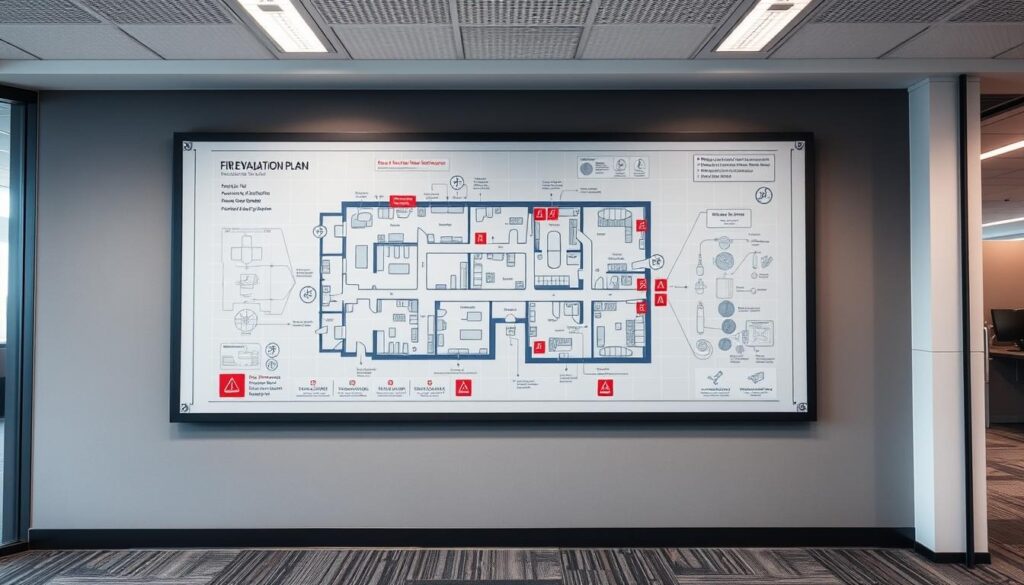
How to Conduct a Fire Drill at Work the Right Way
Fire drills are crucial for workplace safety, needing careful planning and execution. A successful drill requires a structured approach. This includes pre-drill preparations, a step-by-step execution process, and special considerations for employees with disabilities.
Pre-Drill Preparations
Several preparations are necessary before a fire drill. These include notifying relevant authorities, preparing employees without revealing the exact time, and setting up observers to evaluate the drill.
Notifying Relevant Authorities
It’s essential to inform local fire departments or other relevant authorities about the planned fire drill. This prevents unnecessary emergency responses and ensures a smooth drill.
Preparing Employees Without Revealing the Exact Time
Employees should be told that a fire drill will happen within a certain timeframe, but not the exact date or time. This ensures they are prepared and take the drill seriously.
Setting Up Observers and Evaluation Methods
Observers should be appointed to monitor the drill and evaluate its effectiveness. They assess evacuation times, identify bottlenecks, and gather feedback from employees.
Step-by-Step Execution Process
The fire drill’s execution should follow a well-planned sequence for safety and effectiveness.
Sounding the Alarm
The drill starts with sounding the fire alarm, which should be distinct and recognizable. This signal tells employees to evacuate the premises.
Evacuation Procedures
Employees should follow designated evacuation routes to assembly points outside the building. It’s crucial that these routes are clearly marked and employees are familiar with them.
Assembly Point Management
At assembly points, employees should be accounted for, and their presence should be reported to fire wardens. This ensures everyone is safely evacuated and accounted for.
Accommodating Employees with Disabilities
Special considerations are needed for employees with disabilities during a fire drill.
A personalized evacuation plan should be developed for employees with disabilities. This plan outlines the specific assistance they require during an evacuation. This may include the use of evacuation chairs or other specialized equipment.
Technology and Tools for Effective Fire Drills
Effective fire drills go beyond just a plan; they require the right tools and technology. Advanced systems and tools can significantly boost emergency preparedness and response in workplaces.
Fire Alarm Systems and Maintenance
A reliable fire alarm system is essential for any fire drill. Regular maintenance ensures it works right when it matters most. This includes routine checks and tests of alarm devices, making sure everything is in working order.
Digital Tracking for Employee Accountability
Digital tracking systems help monitor employee movement during drills, ensuring everyone is accounted for. This technology spots any evacuation process issues, allowing for needed adjustments.
Communication Tools During Emergencies
Effective communication tools are key during fire drills, enabling clear instructions to employees. Options include two-way radios, public address systems, or mobile apps for emergency communication.
By using these technologies, workplaces can enhance their fire drill protocols. This ensures a quick and safe response in emergencies.
Common Mistakes to Avoid During Fire Drills
To ensure workplace safety, it’s crucial to identify and avoid common pitfalls during fire drills. Conducting fire drills is an essential aspect of preparing employees for emergencies. However, several mistakes can undermine their effectiveness. By understanding these potential errors, employers can take steps to ensure that their fire drills are conducted safely and effectively.
Lack of Clear Communication
One of the most significant mistakes is the lack of clear communication during fire drills. Employees should be well-informed about the drill procedure, evacuation routes, and assembly points. Clear communication helps prevent confusion and ensures a smooth evacuation process.
Failing to Account for All Employees
Another critical mistake is failing to account for all employees during a fire drill. Employers must ensure that every employee is accounted for at the designated assembly point. This can be achieved by using digital tracking systems or having designated fire wardens responsible for headcounts.
| Common Mistakes | Consequences | Solutions |
| Lack of Clear Communication | Confusion, delayed evacuation | Clear instructions, regular updates |
| Failing to Account for All Employees | Risk of injury or harm to unaccounted employees | Digital tracking systems, designated fire wardens |
| Ignoring Seasonal Considerations | Inadequate preparedness for seasonal hazards | Seasonal risk assessments, adapted evacuation plans |
Ignoring Seasonal Considerations in Canada
Ignoring seasonal considerations is another mistake that can compromise the effectiveness of fire drills. In Canada, seasonal factors such as snowstorms or extreme cold can impact evacuation procedures. Employers should adapt their fire drills to account for these seasonal considerations.
Evaluating Fire Drill Performance
Assessing fire drill performance is vital for a safe workplace and adhering to safety guidelines. Regular evaluations help pinpoint areas for improvement. This ensures evacuation procedures are swift and safe in emergencies.
Measuring Evacuation Times
Measuring evacuation times is a key part of evaluating fire drills. It records how long it takes for everyone to leave the building safely. Evacuation times should be compared against established benchmarks to gauge efficiency. Digital tools are recommended for precise time tracking and to spot evacuation bottlenecks.
Collecting Employee Feedback
Getting feedback from employees who took part in the drill is also essential. This can be through surveys or debriefing sessions. Employee feedback offers insights into the evacuation plan’s effectiveness and points out any issues. An anonymous feedback system is suggested to encourage truthful responses.
Documenting Results and Improvement Areas
After the drill evaluation, documenting the findings and improvement areas is crucial. This should include evacuation times, employee feedback, and drill issues. A detailed report aids in developing strategies to tackle these areas and improve fire drill performance.
| Evaluation Criteria | Performance Metrics | Improvement Strategies |
| Evacuation Time | Average time: 5 minutes | Implement digital tracking, optimize evacuation routes |
| Employee Participation | 90% participation rate | Increase awareness, involve employees in planning |
| Feedback Quality | 75% positive feedback | Enhance debriefing sessions, anonymous feedback system |
Conclusion
Ensuring workplace safety through proper fire drills is paramount. Employers must adhere to guidelines to boost emergency preparedness and establish a solid fire drill protocol. This approach is vital for compliance and safety.
A well-executed fire drill is key to spotting potential problems and refining evacuation strategies. Regular drills and ongoing assessments help workplaces react swiftly in fire emergencies. This minimizes risks and guarantees a secure environment for all employees.
To execute a fire drill effectively, engaging employees is crucial. Designating fire wardens and accommodating those with disabilities are also essential. These steps ensure a prompt and safe response to emergencies. Ultimately, they save lives and protect property.