
Exploring the risks of confined spaces reveals a significant threat to workers in Canada. These areas are found in various industries.
Confined spaces risks are often underestimated, leading to severe consequences. Workers in construction, manufacturing, and utilities face these dangers regularly.

Why Confined Spaces Are More Dangerous Than You Think
Understanding the dangers of confined spaces is crucial. It highlights the need for awareness and proper safety measures. These steps are essential to mitigate risks.
By grasping the risks and taking proactive measures, we can lower accident chances. This ensures a safer work environment for everyone.
Confined Spaces and Their Hidden Threats
Confined spaces pose a significant risk to workers, making it crucial to identify their dangers. These areas are enclosed or partially enclosed, limiting safe entry and exit for workers.
What Legally Constitutes a Confined Space in Canada
In Canada, a confined space is defined as an area fully or partially enclosed. It allows workers to enter and perform tasks but restricts their means of entry or exit. These spaces are not designed for continuous human presence, posing serious health and safety risks. The Occupational Health and Safety legislation in Canada outlines the rules for confined spaces.
Common Types of Confined Spaces in Workplaces
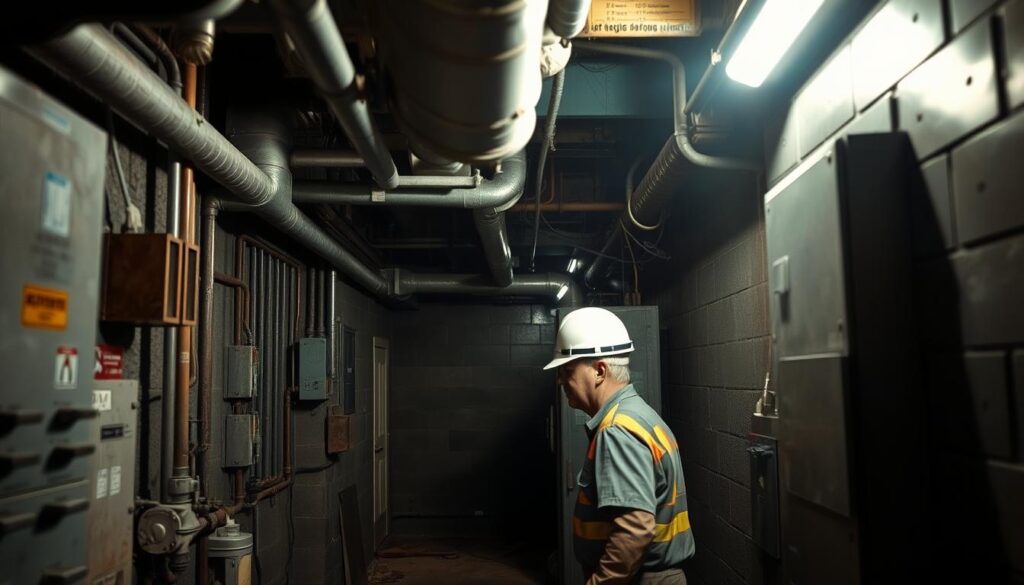
Confined spaces are prevalent in various workplaces, including construction, manufacturing, and storage tanks. Examples include tanks, vessels, pipes, ducts, and manholes. These areas are hazardous due to toxic substances, flammable materials, or poor ventilation.
The Deceptive Nature of Seemingly “Safe” Confined Areas
Some confined spaces may look safe but still pose risks. For example, a storage tank might seem empty and safe but could contain toxic residues or have low oxygen levels. It’s vital to assess each confined space individually and follow safety protocols before entry.
By understanding the definition, types, and hazards of confined spaces, workers and employers can take steps to reduce risks. This ensures a safer working environment for everyone.
Also Read: Importance of Mental Health in Workplace Safety
Why Confined Spaces Are More Dangerous Than You Think
Confined spaces are extremely hazardous, and it’s vital to grasp the risks they pose. These areas, often neglected in workplace safety, present significant dangers to workers. It’s crucial to understand the hazards and take safety measures to prevent incidents.
Statistical Evidence of Confined Space Fatalities in Canada
Canada’s statistics on confined space fatalities are alarming. A substantial number of workplace deaths happen in these spaces each year. These numbers highlight the necessity for strict safety protocols and proper safety training to reduce these risks. Many of these fatalities could be avoided with the right safety precautions.
The “It Won’t Happen to Me” Mindset
The “it won’t happen to me” mindset is a dangerous complacency in confined spaces. Workers who underestimate risks or feel invincible often neglect safety procedures. This attitude can lead to devastating consequences, affecting not just the individual but also their colleagues.
Case Studies: When Confined Spaces Turned Deadly
Case studies of confined space incidents offer valuable insights. They show the importance of following safety protocols and the tragic results of their neglect.
The Multiple-Fatality Chain Reaction
In some cases, a single incident in a confined space can lead to multiple fatalities. This happens when untrained and unprepared rescuers enter the hazardous area, becoming victims themselves. It underscores the need for proper training and emergency planning.
Also Read: How to Create Safety Orientation Videos For Education?
Preventable Tragedies in Canadian Industries
Many confined space tragedies in Canadian industries are preventable. By examining these incidents, it’s clear that ignoring safety l, inadequate training, and insufficient safety measures are common causes. Implementing strong safety protocols and ensuring compliance can greatly reduce these risks.
Five Deadly Hazards of Confined Spaces
Confined spaces pose a variety of dangers, including atmospheric, physical, and environmental risks. Workers entering these areas face numerous hazards that can be fatal if not managed correctly. It’s essential to grasp these risks to implement effective confined space safety measures.

Oxygen Deficiency and Asphyxiation Risks
Oxygen deficiency is a major risk in confined spaces, where air can lack oxygen or be replaced by other gases. This can cause asphyxiation, where the body, or part of it, lacks oxygen. Ensuring proper ventilation and monitoring oxygen levels are critical confined space safety measures.
- Conduct atmospheric testing before entry.
- Use ventilation systems to maintain safe oxygen levels.
- Provide workers with personal oxygen monitors.
Toxic Atmospheres and Gas Exposure
Confined spaces can harbor toxic gases or vapors, posing serious health risks to workers. Exposure to these substances can lead to various health issues, from irritation to life-threatening conditions. Adhering to confined space legislation is necessary to identify and mitigate these hazards.
- Identify potential sources of toxic gases.
- Use gas detection equipment to monitor the atmosphere.
- Implement controls to prevent gas accumulation.
Physical Hazards and Entrapment
Physical hazards within confined spaces can lead to entrapment or injury. These include machinery, equipment, and structural elements that can cause harm. Proper confined space training involves understanding these risks and how to mitigate them.
- Assess the space for physical hazards before entry.
- Use lockout/tagout procedures for machinery.
- Ensure workers are trained in rescue procedures.
Fire and Explosion Risks
The presence of flammable gases or vapors in confined spaces poses a risk of fire or explosion. These incidents can be catastrophic, leading to severe injury or death. Implementing confined space safety measures includes controlling ignition sources and monitoring for flammable atmospheres.
- Eliminate ignition sources.
- Monitor for flammable atmospheres.
- Use explosion-proof equipment.
Biological and Environmental Dangers
Confined spaces can harbor biological hazards, such as bacteria, viruses, or other microorganisms that can cause disease. Environmental conditions, like extreme temperatures, can further exacerbate these risks. Understanding these hazards is crucial for comprehensive confined space training.
- Identify potential biological hazards.
- Use personal protective equipment (PPE) as needed.
- Ensure workers are trained in handling biological hazards.
In conclusion, the five deadly hazards of confined spaces demand careful consideration and management. By understanding these risks and implementing appropriate confined space safety measures, confined space legislation, and providing confined space training, employers can significantly reduce the dangers faced by workers in these environments.
Essential Safety Protocols for Confined Space Entry
To mitigate risks in confined spaces, it’s vital to follow established safety protocols. These spaces pose hazards like oxygen deficiency, toxic atmospheres, and physical dangers. Therefore, robust safety measures are crucial.
Canadian Legislation and Compliance Requirements
In Canada, confined space entry is strictly regulated to protect workers. Employers who are federally regulated must adhere to the Occupational Health and Safety legislation under the Canada Labour Code. This includes conducting risk assessments, developing safety plans, and ensuring worker training.
Following these legislation is not just legal; it’s essential for a safe work environment. Failure to comply can lead to penalties and increased liability in case of accidents.
Key compliance requirements include:
- Risk assessment and safety planning
- Proper training and certification for workers
- Use of appropriate equipment and monitoring systems
- Established emergency response and rescue procedures
Proper Training and Certification Standards
Proper training is fundamental to confined space safety. Workers entering these spaces must be trained to recognize hazards and understand safe entry and exit procedures. In Canada, training programs align with legislation standards.
Certification in confined space training covers hazard recognition, PPE use, and emergency response. Workers must be certified before participating in confined space operations.
Equipment and Monitoring Systems
Appropriate equipment and monitoring systems are vital for confined space safety. This includes atmospheric monitoring, ventilation systems, and personal protective equipment (PPE). Employers must ensure equipment is maintained and workers are trained in its use.
Regular equipment testing and inspection are necessary to maintain its functionality.
Also Read: How to Use Safety Data to Prevent Workplace Incidents?
Emergency Response and Rescue Procedures
Despite precautions, emergencies can happen during confined space entry. Effective emergency response and rescue procedures are essential. These should be part of the safety plan, including rescue services, first aid, and emergency communication.
Workers must be trained in emergency response, including rescue equipment use and help summoning protocols. Regular drills ensure workers are prepared for emergencies.
Conclusion:
Confined spaces are a major risk for workers in many Canadian industries. It’s essential to understand why confined spaces are more dangerous than you think to avoid accidents and ensure safety at work.
This article has delved into the hidden dangers of confined spaces, the alarming statistics on fatalities, and the critical safety measures for entering these areas. It’s clear that effective confined space safety measures are crucial to reduce the risks.
Employers can minimize these hazards by focusing on proper training, using the right equipment, and setting up monitoring systems. Workers must also be informed of these dangers and follow safety guidelines.
Creating a safer work environment in confined spaces requires a joint effort from employers, workers, and legislation bodies. Together, we can prevent accidents and ensure a safer workplace for everyone.
Useful Links:
Health & Safety Programs for Different Industries