
Handling hazardous materials requires a deep understanding of transporting dangerous goods. This knowledge is vital for maintaining a safe workplace.
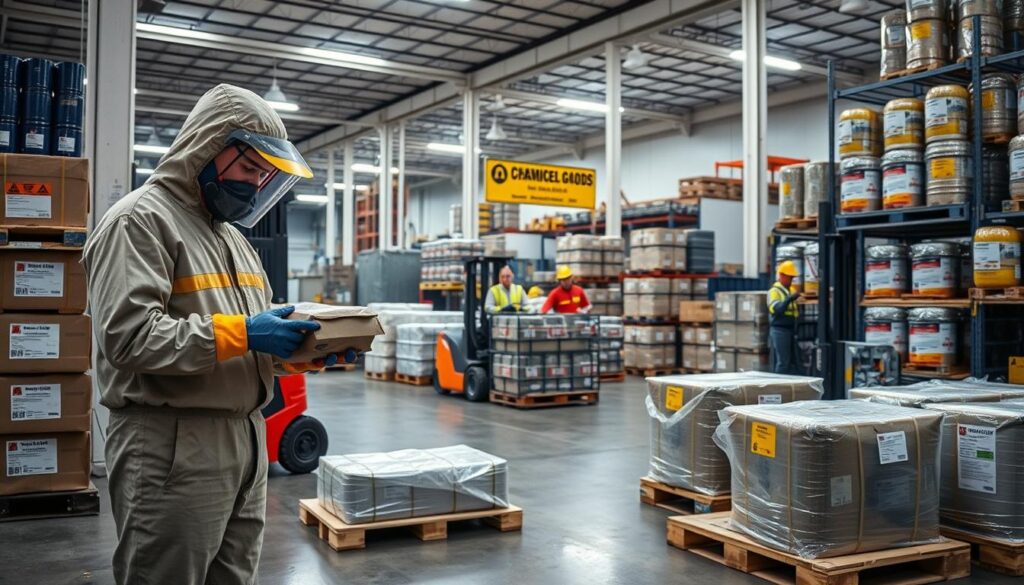
In this article, I’ll delve into the key aspects of managing dangerous goods. We’ll explore the framework, classification systems, and essential documentation. This ensures compliance and safety.
Mastering these critical concepts can greatly reduce risks from hazardous materials. It enhances worker safety significantly.
Understanding the Transportation of Dangerous Goods (TDG) Framework
To handle the complexities of moving dangerous goods, a deep understanding of the TDG framework is essential. It outlines clear guidelines and legislation to reduce risks from hazardous materials transport.
The TDG legislation covers all aspects of handling and moving dangerous goods. Knowing these rules is vital for compliance and a safe workplace.
What Qualifies as Dangerous Goods Under TDG legislation
Dangerous goods under TDG include substances or materials that can harm health, safety, or the environment. Examples are flammable liquids, corrosives, and toxic substances. It’s crucial to classify these goods correctly for proper handling and transport.
| Classification | Examples | Safety Precautions |
| Flammable Liquids | Gasoline, Ethanol | Use spark-proof equipment, keep away from heat sources |
| Corrosives | Sulfuric Acid, Sodium Hydroxide | Wear protective gloves and eyewear, handle with care |
| Toxic Substances | Cyanides, Mercury | Avoid inhalation, skin contact; use in well-ventilated areas |
The Legal Framework and Your Compliance Obligations
Following TDG legislation is a must, and knowing your duties is key. This includes correct classification, labeling, and documentation of hazardous materials. Not following these rules can lead to big fines and safety risks.

By learning the TDG framework and following safety legislation you can make your workplace safer. This also helps avoid legal problems.
Essential Information Every Worker Should Know About Handling Dangerous Goods
If you work with dangerous goods, your role is key in preventing accidents and maintaining a safe work environment. Your tasks involve handling hazardous materials, requiring a deep understanding of your responsibilities.
Your Day-to-Day Responsibilities When Handling Hazardous Materials
Handling hazardous materials demands strict adherence to safety protocols to reduce risks. This includes properly labeling and storing materials, using personal protective equipment (PPE) as needed, and knowing the materials’ properties and hazards. Regular workplace training is crucial to ensure you can handle these materials safely.
Core Safety Principles That Protect You and Others
Core safety principles aim to safeguard you and your colleagues from the dangers of handling hazardous materials. These principles involve grasping the hazard classification of the materials, adhering to safe handling and storage procedures, and being ready for emergencies. Adhering to these principles enhances workplace safety and minimizes accident risks.
By grasping and applying these daily responsibilities and safety principles, you’ll be more adept at safely managing hazardous materials. This ensures a safer workplace for all.
Classification and Identification Systems for Dangerous Goods
To handle chemical tasks safely, it’s crucial to grasp the classification and identification systems for dangerous goods. The TDG framework’s classification and identification of hazardous materials are key. They enable workers to spot potential hazards and take steps to comply.
Navigating the Nine Hazard Classes and Their Divisions
The TDG legislation breaks down dangerous goods into nine hazard classes. Each class has its own divisions and subdivisions. These include:
- Explosives
- Gases
- Flammable liquids
- Flammable solids
- Oxidizing substances
- Toxic and infectious substances
- Radioactive materials
- Corrosive substances
- Miscellaneous dangerous goods
Knowing these hazard classes and their divisions is vital for safe handling, storage, and transport of dangerous goods.
Recognizing and Interpreting Hazard Labels, Placards, and Markings
Hazard labels, placards, and markings are key to identifying substance hazards. They give vital info about a package’s contents, helping workers take precautions. It’s important to correctly recognize and interpret these labels to ensure safety compliance and prevent accidents.
By understanding the classification and identification systems for dangerous goods, I can handle hazardous materials safely. This ensures compliance with legislation requirements.
Essential Documentation and Communication Protocols
The transportation of dangerous goods demands precise documentation and clear communication protocols. This is to prevent accidents and ensure legislative compliance. As I handle hazardous materials, I understand the importance of accurate documentation and effective communication. These are crucial for maintaining a safe working environment.
To achieve this, I focus on two critical aspects. First, I need to complete and verify shipping documents correctly. Second, I must access and utilize Safety Data Sheets (SDS) effectively.
Completing and Verifying Shipping Documents Correctly
Shipping documents are vital for the safe transportation of hazardous materials. I must ensure these documents are completed accurately and verified before shipping. The key elements to include are:
- The proper shipping name and identification number
- The hazard class and packing group
- The quantity and weight of the hazardous materials
- Special handling instructions
By verifying these details, I can ensure compliance with safety legislation. This prevents potential hazards during transportation.
Also Read: What Happens During a Job Site Safety Inspection?
Accessing and Utilizing Safety Data Sheets (SDS) Effectively
Safety Data Sheets (SDS) provide crucial information about the safe handling, use, storage, and disposal of hazardous materials. To utilize SDS effectively, I should:
- Ensure that SDS are readily accessible to all personnel handling hazardous materials
- Regularly review and update SDS to reflect any changes in the composition or handling procedures of hazardous materials
- Use the information in SDS to develop safe handling procedures and emergency response plans
By following these steps, I can ensure I am well-informed about the hazardous materials I handle. This allows me to take necessary precautions to maintain a safe working environment.
Practical Handling and Emergency Response Procedures
As someone who works with hazardous materials, I must understand the practical aspects of handling and emergency response. It’s not just about knowing the rules; it’s about applying that knowledge in real-world situations. Here, I’ll cover the essential procedures for safely managing dangerous goods.
Safe Loading, Storage, and Transportation Techniques
Safe handling starts with proper loading, storage, and transportation. This means using the right containers, securing goods to prevent movement or leakage, and ensuring all equipment is in top shape. It’s also crucial to consider the weight and volume of the goods, along with any specific handling and storage needs.
Some key considerations include:
- Using containers that are compatible with the goods being transported
- Ensuring that goods are properly secured to prevent leakage or shifting
- Using equipment that is in good condition and suitable for the task
Compatibility Guidelines and Segregation Requirements
When dealing with various hazardous materials, knowing compatibility guidelines and segregation requirements is vital. This involves separating incompatible goods, like flammable and oxidizing substances, and storing them in designated areas.
| Goods | Compatibility | Segregation Requirements |
| Flammable liquids | Incompatible with oxidizing substances | Separate by at least 3 meters |
| Oxidizing substances | Incompatible with flammable liquids | Store in a designated area |
| Toxic substances | Incompatible with food and food products | Store in a separate, ventilated area |
Responding to Spills, Leaks, and Other Dangerous Goods Incidents
In the event of a spill, leak, or other dangerous goods incident, quick and effective response is crucial. This involves evacuating the area, notifying the relevant authorities, and using personal protective equipment (PPE) to minimize exposure.
Some key steps to follow include:
- Evacuating the area and notifying the relevant authorities
- Using PPE to minimize exposure to the hazardous material
- Containing the spill or leak using suitable equipment and materials
Conclusion:
Understanding the basics of TDG is crucial for a safe work environment. By applying what you’ve learned, you’ll ensure your safety and that of others. This is key to a compliant and secure workplace.
To effectively use your TDG knowledge, focus on safety compliance and regular training. This helps you spot and manage risks, handle emergencies, and keep records accurate. It’s a proactive step towards a safer workplace.
Following the guidelines in this article will help you confidently manage dangerous goods. This not only safeguards you and your colleagues but also meets safety standards. It’s a win-win for everyone involved.
With a solid grasp of TDG basics, it’s time to apply this knowledge. Stay alert, proactive, and keep learning about handling hazardous materials. This continuous education is essential for maintaining a safe and compliant work environment.
Useful Links:
Common Fall Protection Mistakes and How to Avoid Them
The True Cost of Fall-Related Injuries in Construction